



Introduction In mining, geology, and mineral processing, knowing exactly what is contained in a mineral sample is critical to making sound technical and commercial decisions. While visual inspection and conventional chemical analysis can provide valuable information, they may not fully reveal the crystalline phases present in a geological material. This is where X-Ray Diffraction (XRD) analysis becomes an important analytical technique. XRD provides detailed information about the crystalline structure of minerals by measuring how X-rays interact with the atomic arrangement within a sample. The resulting diffraction pattern, known as a diffractogram, contains characteristic peaks that can be used to identify and assess the mineral phases present. At Zirconex Mining & Metal Laboratory, XRD analysis helps transform geological samples into reliable mineralogical data that can support exploration, processing, quality control, and other mining-related decisions. What Is X-Ray Diffraction (XRD)? X-Ray Diffraction is an analytical technique used to identify crystalline materials based on the way they diffract X-rays. When a mineral sample is exposed to X-rays, its atoms interact with the incoming radiation. Because atoms in crystalline minerals are arranged in specific, repeating patterns, the X-rays are diffracted at characteristic angles. The resulting diffraction pattern acts like a fingerprint for the crystalline phases within the sample. By comparing the measured pattern with established reference databases, laboratory scientists can identify the minerals present and, where appropriate, estimate their relative abundance. How Does XRD Analysis Work? The journey from a mineral sample to reliable XRD data involves several important stages. 1. Sample Preparation Proper sample preparation is essential for obtaining representative and reliable results. Depending on the material and analytical objective, the sample may be dried, crushed, pulverized, homogenized, and prepared to meet the requirements of the XRD instrument. Poor sample preparation can affect the quality of the diffraction pattern and ultimately influence mineral identification. 2. X-Ray Exposure The prepared sample is placed into an XRD instrument, where it is exposed to X-rays. As the X-rays interact with the crystalline structure of the material, they are diffracted at specific angles. 3. Generation of the Diffractogram The instrument records the intensity of the diffracted X-rays as a function of diffraction angle. The resulting graph is called an XRD diffractogram. Distinctive peaks appear at positions corresponding to the crystal structures of different minerals. 4. Mineral Phase Identification The measured diffraction pattern is compared with reference patterns to determine which crystalline phases are present. For example, XRD can help distinguish between different mineral phases that may appear visually similar but have different crystalline structures. 5. Data Interpretation The final stage involves interpreting the diffraction data in the context of the geological or industrial question being investigated. Depending on the sample and analytical method, XRD data can provide information about phase identity, crystallinity, structural characteristics, and the presence of major or minor crystalline phases. What Can XRD Analysis Determine? XRD analysis provides valuable mineralogical information, including: The specific information obtainable depends on the sample, preparation method, instrument configuration, and analytical approach used. Why Is XRD Important in Mining and Mineral Exploration? Mineralogical information can have a direct impact on mining and processing decisions. Improving Mineral Characterization Before a mineral deposit can be properly evaluated, it is important to understand the minerals that make up the material. XRD can provide detailed information about crystalline phases that may not be apparent through visual examination alone. Supporting Mineral Processing Different minerals can respond differently to crushing, grinding, separation, flotation, leaching, and other processing techniques. Understanding the mineralogical composition can therefore help technical teams evaluate processing options and investigate factors that may influence recovery. Identifying Unwanted Mineral Phases The presence of certain gangue or alteration minerals can influence processing performance, product quality, or downstream operations. XRD can help identify these phases and provide additional information for mineralogical assessment. Supporting Exploration Decisions During mineral exploration, understanding the mineralogy of geological samples can provide useful information about alteration zones, host rocks, mineral assemblages, and the characteristics of a deposit. Combined with geological observations and other laboratory analyses, XRD results can contribute to a more comprehensive understanding of a mineral system. XRD and Chemical Analysis: Complementary Techniques XRD and chemical analysis answer different but complementary questions. Chemical analysis can help determine the elemental composition of a sample—for example, the concentrations of elements such as iron, aluminium, calcium, silicon, or other target elements. XRD analysis, on the other hand, focuses primarily on the crystalline phases in which those elements occur. This distinction is important. Two samples may have similar elemental compositions but contain different mineral phases, which can result in different processing behaviour. For this reason, combining mineralogical analysis with analytical chemistry can provide a more complete understanding of geological materials. From Peaks to Practical Decisions An XRD diffractogram may initially appear to be simply a collection of peaks on a graph. However, each peak contains information about the crystalline structure of the material being investigated. The real value comes from converting that analytical signal into meaningful mineralogical information. For mining companies, geologists, mineral processors, researchers, and other technical professionals, reliable XRD data can help answer important questions such as: The answers can support better technical evaluation and more informed decision-making. Why Reliable XRD Results Matter The quality of an analytical result depends on more than simply running a sample through an instrument. Reliable XRD analysis requires appropriate: When these elements work together, XRD becomes a powerful tool for converting complex mineral samples into actionable information. XRD Analysis at Zirconex Mining & Metal Laboratory At Zirconex Mining & Metal Laboratory, we combine analytical chemistry, mineral science, and laboratory expertise to provide data that can support mineral exploration, characterization, processing, and technical decision-making. Our XRD capabilities are designed to help clients understand the mineralogical characteristics of their samples and obtain meaningful analytical information from their geological materials. Whether you are evaluating exploration samples, investigating mineral processing challenges, characterizing geological materials, or conducting research, accurate mineralogical data can provide an important foundation for your work. Conclusion From the moment a geological sample enters the laboratory to the
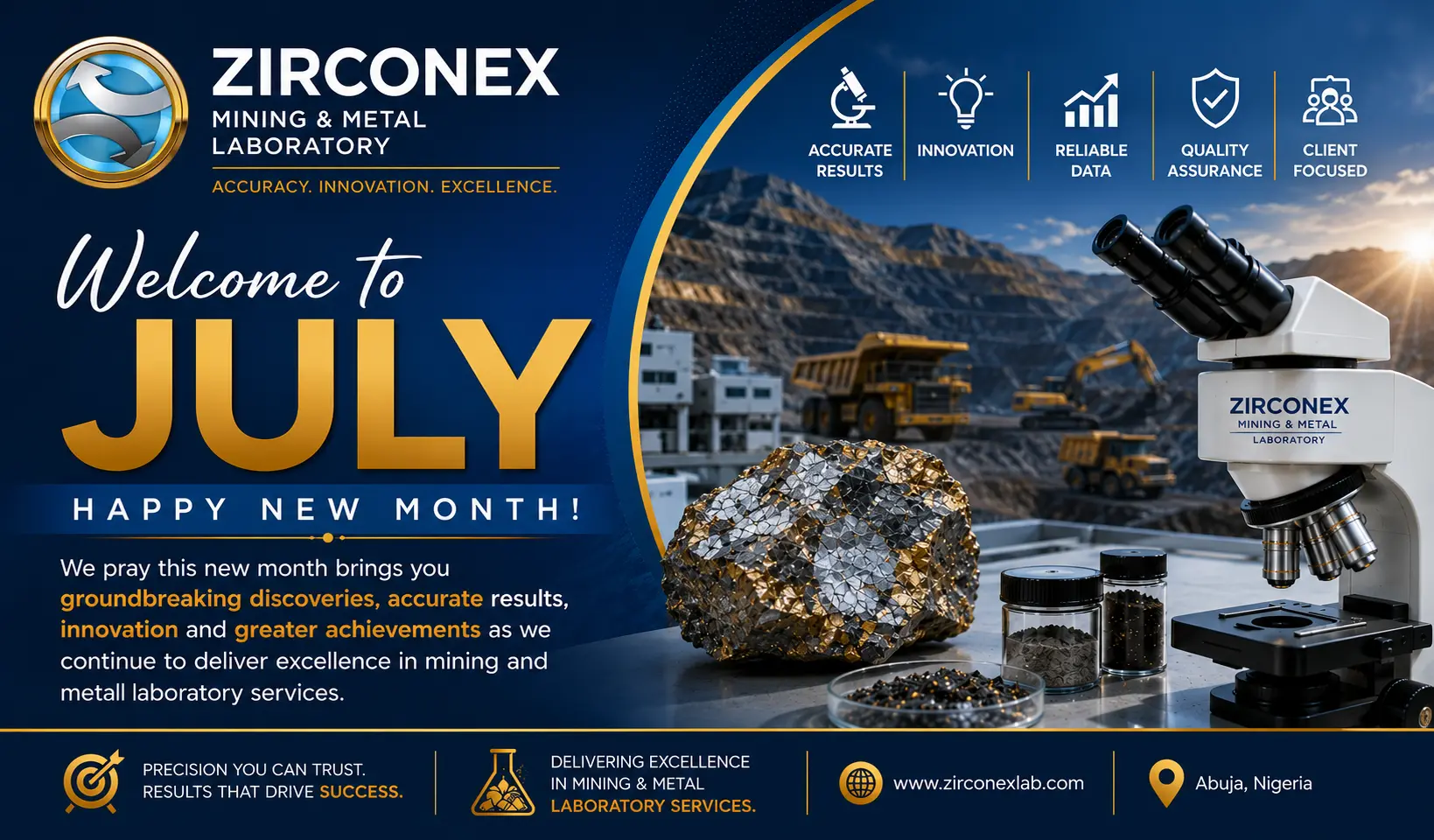
Happy New Month, July! Wishing You a Month of Breakthroughs, Innovation and Excellence
Celebrate the new month of July with a message of breakthrough, innovation, excellence, and renewed purpose from Zirconex Mining Laboratories.
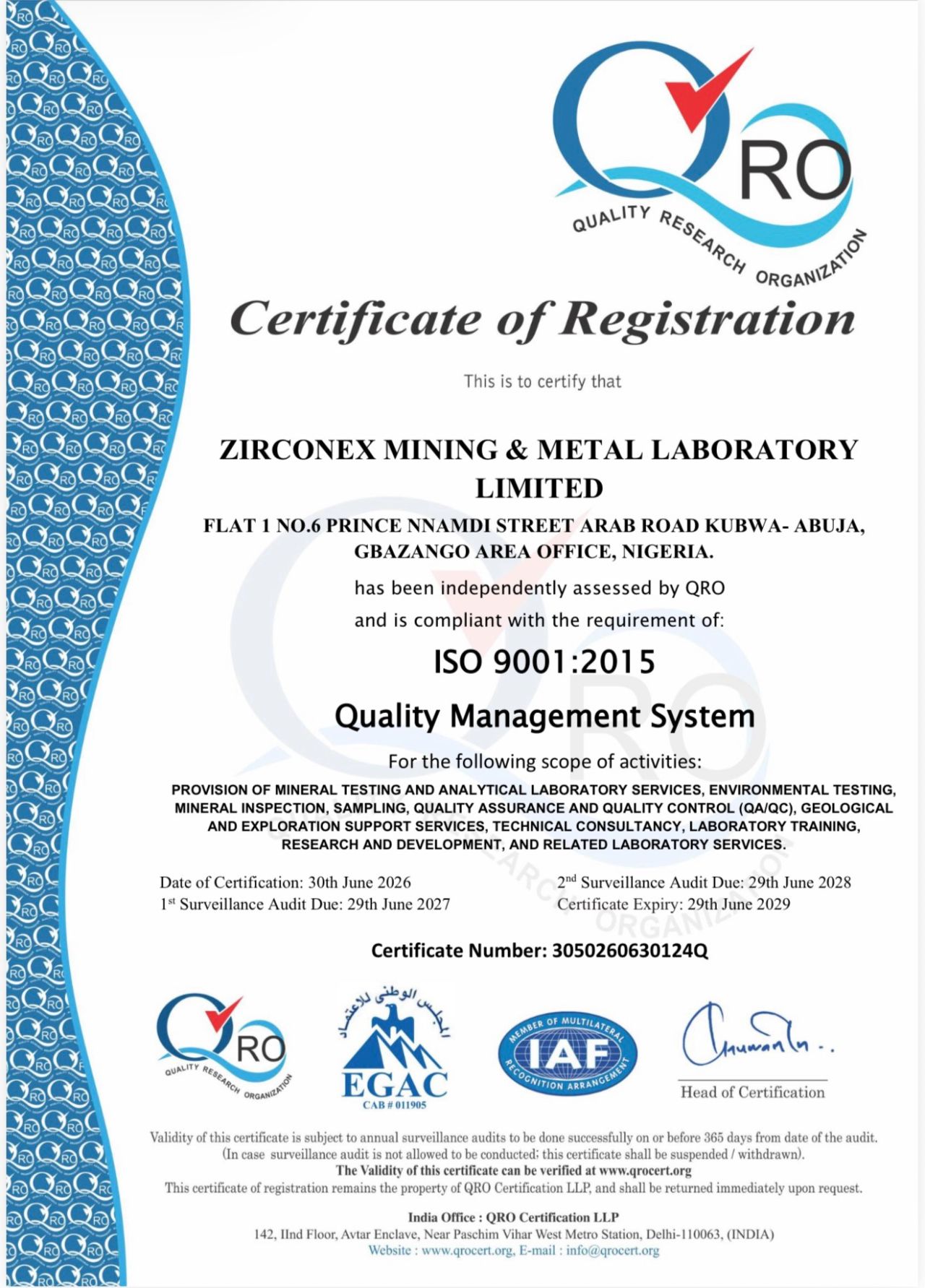
Zirconex Mining & Metal Laboratory Achieves ISO 9001:2015 Quality Management System Certification
At Zirconex Mining & Metal Laboratory, excellence has always been more than a goal—it is the foundation of everything we do. Today, we are proud to share an important milestone in our journey toward becoming a world-class provider of laboratory and exploration services. Zirconex Mining & Metal Laboratory Ltd. has officially achieved ISO 9001:2015 Quality Management System (QMS) Certification. This internationally recognized certification validates our commitment to delivering consistent, reliable, and high-quality laboratory services while continually improving our processes to meet—and exceed—the expectations of our clients and stakeholders. For our customers, this achievement provides even greater confidence that every service we deliver is backed by a robust quality management system designed to ensure accuracy, efficiency, consistency, and continual improvement. What Does ISO 9001:2015 Certification Mean? ISO 9001:2015 is the world’s leading standard for Quality Management Systems (QMS). Organizations that achieve this certification have demonstrated their ability to consistently provide products and services that meet customer requirements while continually enhancing customer satisfaction through effective quality management practices. For clients in the mining, mineral processing, environmental, and geological sectors, working with an ISO 9001:2015 certified laboratory means partnering with an organization that prioritizes: This certification reflects our commitment to maintaining internationally recognized quality standards across every stage of our operations. Certified Services Covered by Our Quality Management System Our ISO 9001:2015 certification encompasses a wide range of professional laboratory and exploration services, including: Each of these services is delivered using standardized procedures, quality controls, and continuous monitoring to ensure dependable and repeatable results for every client. What This Means for Our Clients Achieving ISO 9001:2015 certification is more than earning a certificate—it represents our ongoing promise to deliver value through quality, precision, and professionalism. Clients who partner with Zirconex can expect: Whether you are involved in mineral exploration, mining operations, environmental monitoring, research, or quality control, our certified quality management system ensures that your projects receive the highest level of attention and professionalism. A Milestone Made Possible by Our Team and Clients This achievement is a reflection of the dedication, expertise, and professionalism of the entire Zirconex team. Every member of our organization has contributed to building a culture where quality is embedded in every process, every analysis, and every client interaction. We also extend our sincere appreciation to our valued clients, partners, and stakeholders for the trust they have placed in us over the years. Your confidence has inspired us to continually improve and strive for excellence. Our Commitment to Continual Improvement While we celebrate this significant milestone, we recognize that quality is a continuous journey rather than a destination. Moving forward, we remain committed to: Our vision is to become a globally recognized centre of excellence in mineral testing, inspection, environmental analysis, and exploration support services. Looking Ahead The achievement of ISO 9001:2015 certification marks an exciting new chapter for Zirconex Mining & Metal Laboratory. It reinforces our dedication to providing world-class laboratory services that help clients make informed decisions with confidence. As the mining industry continues to evolve, we will continue investing in quality, innovation, and technical excellence to ensure we remain a trusted partner for mining companies, exploration firms, government agencies, researchers, and industry stakeholders across Nigeria and beyond. Because at Zirconex, quality is not simply something we do—it is our culture. Partner with an ISO 9001:2015 Certified Laboratory If you’re looking for reliable mineral testing, environmental analysis, inspection, QA/QC services, or geological support backed by internationally recognized quality standards, Zirconex Mining & Metal Laboratory is ready to support your next project. Contact us today to learn how our certified laboratory services can help you achieve accurate results, regulatory compliance, and greater confidence in your mining and exploration operations.
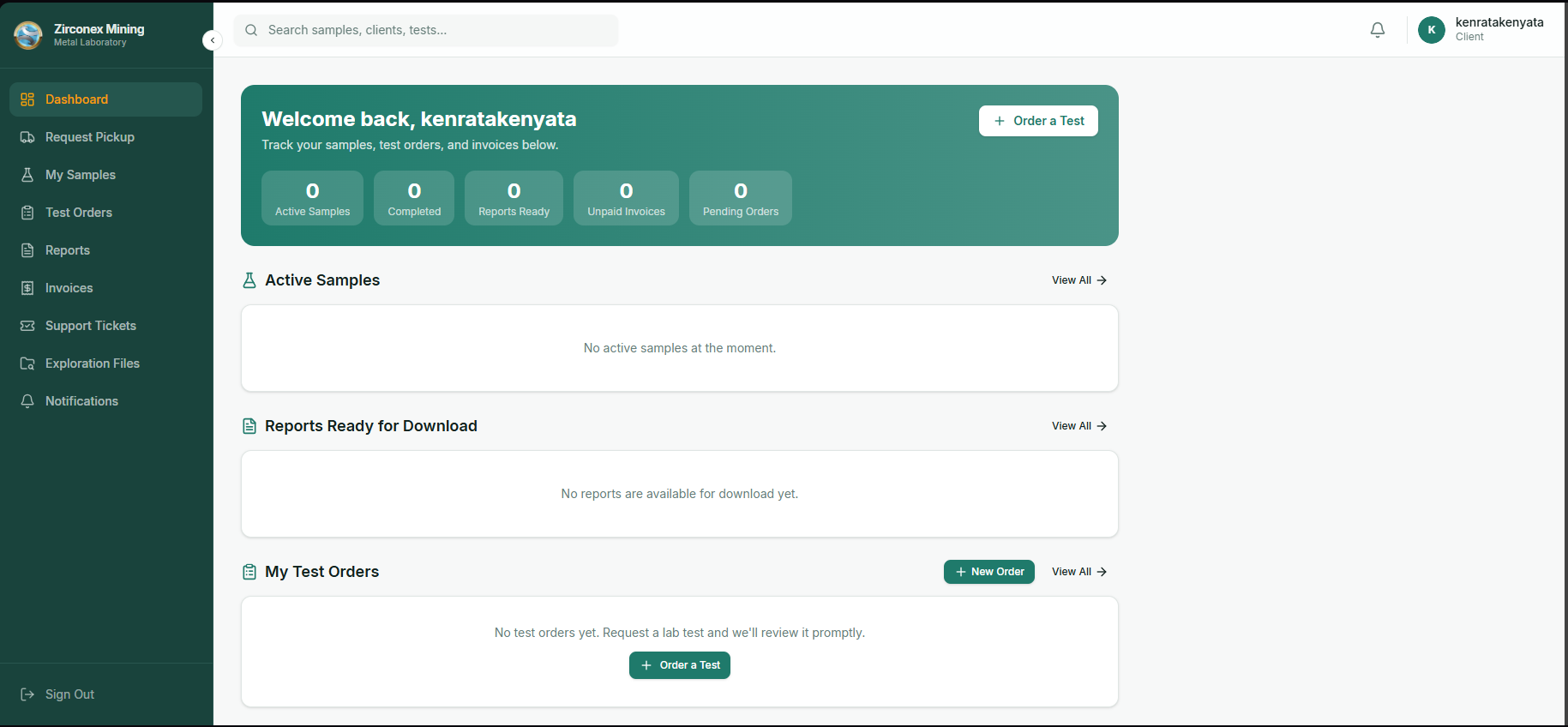
Zirconex Launches Its Laboratory Information Management System (LIMS) with a Powerful Client Portal
The future of laboratory testing at Zirconex Mining and Metal Laboratory has arrived. We are excited to announce the official launch of the Zirconex Laboratory Information Management System (LIMS)—a modern digital platform designed to make laboratory testing faster, more transparent, and more convenient for our clients. Whether you are a mining company, mineral processor, exploration firm, government agency, research institution, consultant, or individual client, our new LIMS provides a seamless way to interact with our laboratory from anywhere, at any time. What Is the Zirconex LIMS? The Zirconex Laboratory Information Management System is an integrated platform that manages the entire laboratory testing process—from sample submission to report delivery. With the introduction of our Client Portal, clients can now access laboratory services online without the need for repeated phone calls or physical visits to monitor the progress of their samples. The system has been developed to improve efficiency, reduce turnaround times, enhance communication, and provide complete transparency throughout the testing process. Introducing the Zirconex Client Portal The Client Portal gives you secure online access to your laboratory activities through a personalized dashboard. Once registered, you can conveniently manage your laboratory requests from any device with an internet connection. Key Features of the Client Portal Order Laboratory Tests Online Request laboratory analyses directly through the portal. Simply select the tests you require, submit your request, and our laboratory team will begin processing your order. Request Sample Pickup Need us to collect your samples? The portal allows you to submit pickup requests without making a phone call. Our logistics team will receive your request and coordinate sample collection from your specified location. Track Sample Pickup Status Stay informed throughout the pickup process by monitoring each stage, including: Monitor Testing Progress in Real Time Know exactly where your samples are in the laboratory workflow. The portal provides live status updates, including: This transparency helps you better plan your operations and stay informed without unnecessary follow-ups. Download Test Reports Anytime Once testing has been completed and approved, your reports become available for immediate download in PDF format. Your reports remain securely stored in your account, allowing you to access them whenever you need them. Verify Report Authenticity Every laboratory report issued through the Zirconex LIMS includes a unique QR code. Scanning the QR code opens a verification page that confirms the authenticity of the report, providing confidence for clients, regulators, investors, financial institutions, and business partners who rely on laboratory results for critical decisions. Secure Client Dashboard Your account provides secure access to: Your information remains private and accessible only to authorized users. Benefits of Using the Zirconex Client Portal Our new digital platform offers several advantages, including: Built to Support the Mining Industry At Zirconex Mining and Metal Laboratory, we continuously invest in technology that improves the quality and efficiency of our services. The launch of our Laboratory Information Management System represents another important milestone in our commitment to delivering reliable laboratory services supported by innovation, accuracy, and exceptional customer experience. Whether your project involves mineral exploration, mine development, production, quality control, or research, our digital platform makes laboratory testing more convenient than ever before. Create Your Client Portal Account Today We invite all existing and new clients to register on the Zirconex Client Portal and experience a faster, smarter, and more convenient way to request laboratory services. Create your account, submit your laboratory test requests online, track your samples in real time, and download your reports whenever they are ready—all from one secure platform. Ready to get started? Sign up for the Zirconex Client Portal today and place your first laboratory test request online. Client Portal For assistance with registration or laboratory services, please contact the Zirconex team. We look forward to supporting your analytical testing needs with greater speed, transparency, and convenience than ever before.
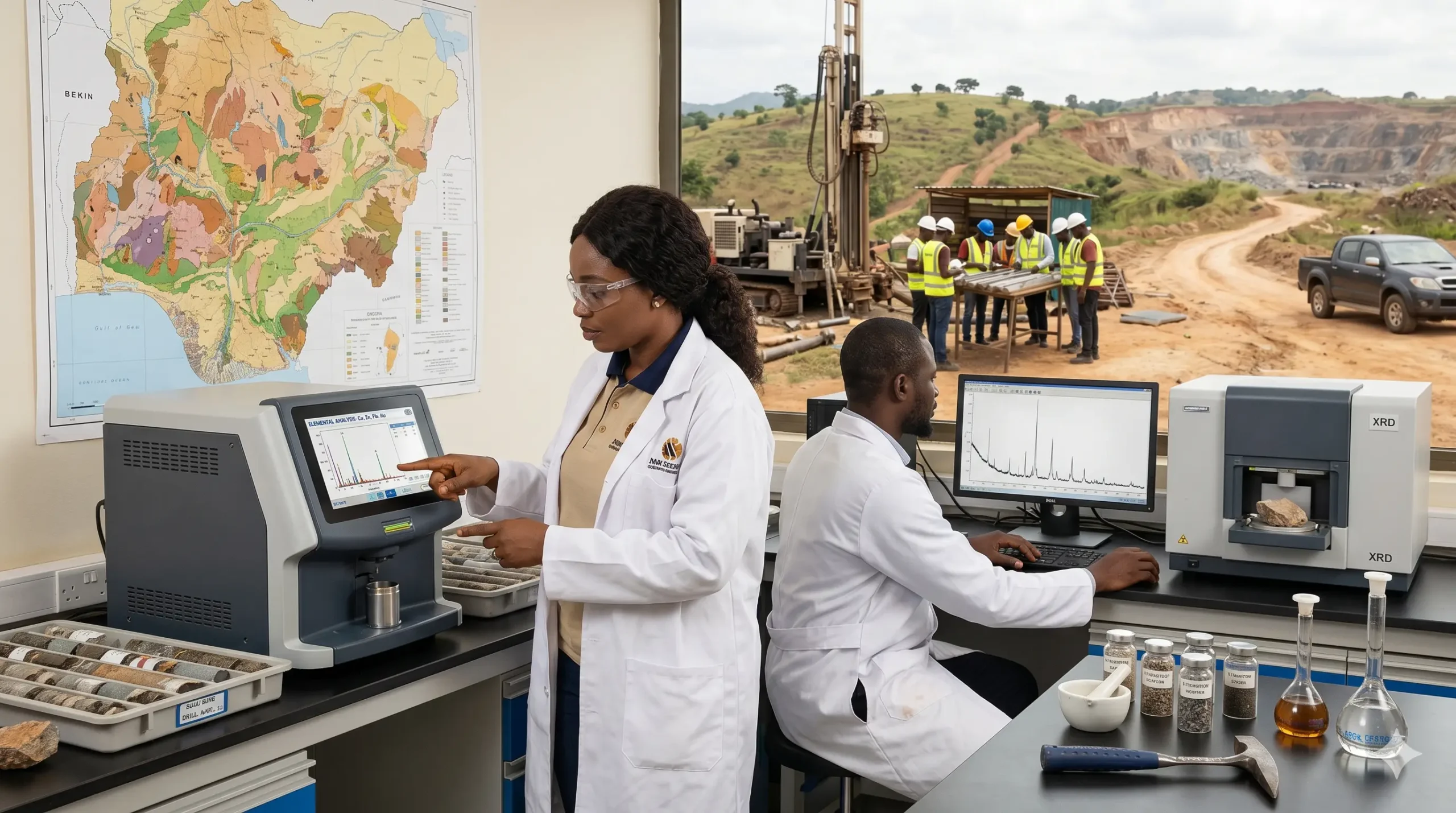
The Role of Geochemical Analysis in Mineral Exploration
Mineral exploration is a complex and data-driven process that requires a combination of geological, geophysical, and geochemical investigations to identify economically viable mineral deposits. Among these techniques, geochemical analysis plays a critical role in helping exploration companies locate hidden mineral resources, reduce exploration risks, and make informed investment decisions. As the global demand for minerals continues to grow, the importance of accurate geochemical data has become more significant than ever. Whether exploring for gold, lithium, copper, iron ore, rare earth elements, or industrial minerals, geochemical analysis provides valuable insights into the composition and distribution of elements within rocks, soils, sediments, and water samples. What is Geochemical Analysis? Geochemical analysis is the scientific examination of geological materials to determine their chemical composition. The process involves collecting samples from the field and analyzing them in a laboratory to identify and quantify the elements and compounds they contain. Samples commonly analyzed include: The resulting data helps geologists understand mineralization patterns and identify areas with potential economic mineral deposits. Why Geochemical Analysis is Important in Mineral Exploration Geochemical analysis serves as one of the most effective tools for discovering new mineral deposits. Minerals often leave detectable chemical signatures in surrounding rocks, soils, and water long before they become visible on the surface. By identifying these geochemical anomalies, exploration teams can narrow down target areas and focus resources where the likelihood of mineralization is highest. Some of the key benefits include: 1. Identifying Mineralization Zones Geochemical surveys can reveal elevated concentrations of specific elements associated with mineral deposits. For example: These indicators help geologists pinpoint areas that warrant further investigation. 2. Reducing Exploration Costs Mineral exploration can be expensive. Conducting geochemical analysis early in the exploration process helps companies prioritize high-potential targets and avoid unnecessary drilling in unpromising areas. By focusing exploration efforts strategically, companies can significantly reduce operational costs while improving the likelihood of discovery. 3. Supporting Geological Mapping Geochemical data complements geological mapping by providing information that may not be visible at the surface. Chemical signatures can reveal hidden structures, alteration zones, and mineralization trends that help geologists better understand the subsurface environment. 4. Improving Resource Evaluation Once mineralization has been identified, geochemical analysis contributes to resource estimation and feasibility studies. Accurate laboratory results help determine ore grade, mineral distribution, and economic potential, which are essential factors in mine development planning. Types of Geochemical Surveys Different exploration stages require different geochemical approaches. Soil Geochemistry Soil sampling is one of the most widely used exploration methods. Soil samples are collected systematically across an area and analyzed for trace elements associated with target minerals. This technique is particularly effective in regions where bedrock is covered by weathered material. Rock Geochemistry Rock samples are collected from outcrops, trenches, or drill cores. These samples provide direct information about the geology and mineralization of an area. Rock geochemistry is often used to confirm targets identified during preliminary surveys. Stream Sediment Surveys Stream sediments naturally accumulate materials eroded from surrounding rocks. Analyzing sediment samples can help identify mineralized zones upstream, making this method a cost-effective reconnaissance tool. Water Geochemistry Groundwater and surface water can contain dissolved elements derived from mineralized rocks. Water geochemistry is increasingly used to detect concealed mineral deposits, particularly in challenging terrains. Laboratory Techniques Used in Geochemical Analysis Modern mining laboratories utilize advanced analytical techniques to generate accurate and reliable results. X-Ray Fluorescence (XRF) XRF analysis is commonly used to determine the elemental composition of geological samples quickly and accurately. It is widely applied in exploration, mining, and quality control operations. Inductively Coupled Plasma (ICP) Analysis ICP techniques enable laboratories to detect trace and ultra-trace concentrations of elements, making them highly valuable in mineral exploration programs. Fire Assay Fire assay remains the industry standard for gold analysis due to its high level of accuracy and reliability. X-Ray Diffraction (XRD) XRD analysis identifies mineral phases within a sample and helps geologists understand mineralogical composition and alteration patterns. The Role of Geochemical Analysis in Modern Mining The mining industry is increasingly relying on scientific data to improve exploration efficiency and sustainability. Geochemical analysis provides objective, measurable information that supports decision-making throughout the mining lifecycle. From greenfield exploration projects to advanced resource evaluation programs, geochemical data helps companies: Geochemical Analysis and Nigeria’s Mining Industry Nigeria possesses significant deposits of gold, lithium, lead-zinc, iron ore, limestone, barite, and other valuable minerals. As exploration activities continue to expand across the country, geochemical analysis has become an essential component of successful mineral development projects. Reliable laboratory testing enables mining companies, investors, and exploration teams to make informed decisions based on accurate scientific data rather than assumptions. With growing interest in critical minerals such as lithium and rare earth elements, demand for professional geochemical laboratory services is expected to increase significantly in the coming years. Conclusion Geochemical analysis is one of the most powerful tools available in mineral exploration. By providing detailed information about the chemical characteristics of geological materials, it helps exploration teams identify mineralization, reduce risk, and maximize the efficiency of exploration programs. As the mining industry continues to evolve, high-quality geochemical data will remain fundamental to discovering new mineral resources and supporting sustainable mineral development. Companies that invest in accurate laboratory testing gain a significant advantage in identifying opportunities and making data-driven exploration decisions. For organizations seeking reliable mineral testing and analytical services, partnering with an experienced mining laboratory can provide the insights needed to unlock the full potential of their exploration projects.
Building Technical Capacity Through Practical XRD Training
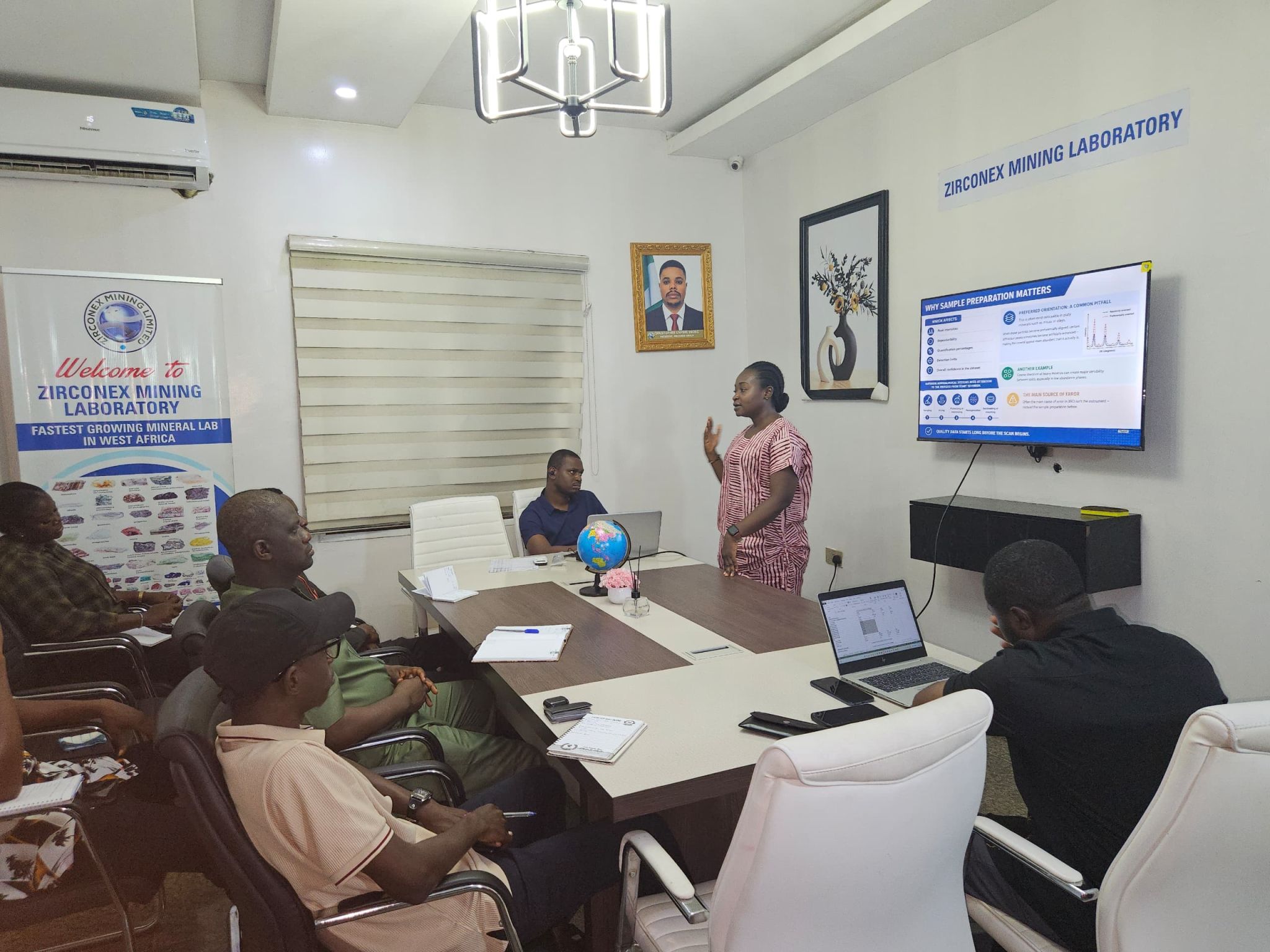
Zirconex Mining Laboratory is pleased to announce the successful conclusion of our intensive 5-Day Hands-On X-Ray Diffraction (XRD) Training Programme, a specialized capacity-building initiative designed for professionals, researchers, students, and industry stakeholders seeking practical expertise in mineralogical analysis. The programme culminated today with the final training session, marking the successful completion of another impactful knowledge-sharing event aimed at advancing analytical excellence within Nigeria’s mining, academic, and research sectors. Why XRD Training Matters X-Ray Diffraction (XRD) is one of the most important analytical techniques used in the mining, geology, materials science, and research industries. It enables scientists and laboratory professionals to identify crystalline materials, determine mineral composition, perform quantitative analysis, and support critical decision-making processes in exploration, mineral processing, quality control, and academic research. As demand for accurate mineral characterization continues to grow, there is an increasing need for professionals with hands-on experience in XRD analysis and interpretation. This training programme was specifically designed to bridge the gap between theoretical knowledge and practical laboratory application. What Participants Learned During the Programme Over the course of five intensive days, participants received practical training and real-world exposure to essential XRD laboratory procedures and analytical techniques. Key training areas included: 1. XRD Sample Preparation Participants learned industry-standard methods for preparing samples to ensure accurate and reproducible XRD results. Proper sample preparation remains one of the most critical steps in obtaining reliable diffraction data. 2. Diffractogram Interpretation The programme provided hands-on guidance on reading and interpreting XRD diffractograms, enabling participants to understand peak positions, intensities, and patterns for accurate mineral identification. 3. Mineral Phase Identification Attendees gained practical experience identifying mineral phases using diffraction data and reference databases, a crucial skill in mineral exploration and materials characterization. 4. Quantitative Phase Analysis Participants explored quantitative phase analysis techniques using specialized software tools, allowing them to determine the relative abundance of mineral phases within a sample. 5. Rietveld Refinement Techniques A major highlight of the training was the introduction to Rietveld refinement, an advanced analytical method widely used to improve the accuracy of quantitative mineralogical analysis and structural characterization. 6. Quality Assurance and Quality Control (QA/QC) The programme emphasized laboratory best practices, including QA/QC procedures, result validation, and data reliability measures necessary for maintaining analytical integrity. 7. Professional XRD Reporting Participants also learned how to generate professional XRD reports and prepare Certificates of Analysis (CoA) that meet industry and client expectations. A Rewarding Learning Experience Throughout the programme, participants demonstrated remarkable enthusiasm, engagement, and commitment to learning. The interactive nature of the training encouraged collaboration, practical problem-solving, and meaningful discussions that enriched the overall learning experience. The growth observed over the five-day period reflected the value of hands-on technical training and the importance of continuous professional development within the mining and analytical laboratory sectors. Zirconex’s Commitment to Analytical Excellence At Zirconex Mining Laboratory, we believe that strengthening technical expertise is essential for advancing the mining industry and supporting scientific innovation. Our training programmes are designed not only to equip participants with practical laboratory skills but also to promote best practices, analytical accuracy, and professional competence across the industry. As part of our ongoing commitment to capacity building, we will continue to provide specialized laboratory training opportunities covering mineral analysis, geochemistry, sample preparation, laboratory quality management systems, and advanced analytical techniques. Thank You to All Participants We extend our sincere appreciation to every participant who contributed to the success of this programme. Your dedication, curiosity, and active participation made the training both productive and rewarding. We are excited to see how these newly acquired XRD skills will be applied in laboratories, research institutions, universities, mining projects, and industrial operations across the country and beyond. We look forward to welcoming future participants to upcoming training programmes at Zirconex Mining Laboratory. Interested in knowing more about XRD and our XRD facility? Check out these posts from our blog “Nigeria Advances Mineral Exploration with Zirconex Mining & Metal Laboratory’s New XRD Facility in Abuja“ “X-Ray Diffraction (XRD) Laboratory” For enquiries about upcoming XRD training, laboratory services, mineral analysis, or customized corporate training programmes, contact Zirconex Mining Laboratory today.
Zirconex Mining and Metal Laboratory Welcomes June 2026: Building on a Month of Innovation, Excellence, and Growth in Nigeria’s Mining Industry
As we step into the month of June 2026, Zirconex Exploration Limited proudly welcomes clients, partners, stakeholders, and industry professionals to another month filled with opportunities, innovation, and measurable progress across Nigeria’s mining and mineral development sector. The beginning of a new month provides an opportunity to reflect on recent achievements, evaluate progress, and strengthen our commitment to delivering world-class mining, mineral testing, exploration, and laboratory services. At Zirconex, every sample analyzed, every project completed, and every technical challenge solved contributes to our broader mission of unlocking the value of Nigeria’s mineral resources while promoting sustainable mining practices and technical excellence. Driving Excellence in Mineral Exploration and Laboratory Services Nigeria’s mining industry continues to attract significant attention from investors, government agencies, exploration companies, and mineral processors seeking reliable geological data and accurate analytical results. As a leading mining and metal laboratory, Zirconex remains committed to supporting this growth through advanced laboratory testing, mineral characterization, geological consulting, exploration support services, and quality assurance programs. Our work spans multiple areas of the mineral value chain, including: By combining technical expertise with modern analytical equipment, we help mining companies make informed decisions that improve operational efficiency and project outcomes. Looking Back at May 2026: A Month of Significant Milestones May 2026 was an important month for Zirconex, marked by several achievements that further strengthened our position as one of Nigeria’s emerging leaders in mineral testing and mining laboratory services. Commissioning of the Zirconex XRD Facility One of the most significant highlights of the month was the commissioning of the Zirconex X-Ray Diffraction (XRD) Facility. This milestone represents a major advancement in our laboratory capabilities and our commitment to delivering more comprehensive mineralogical solutions to the mining industry. According to the company, the facility enhances mineral phase identification, rare earth mineral detection, metallurgical decision-making, and quantitative mineralogical analysis. The introduction of XRD technology allows exploration companies, mining operators, and investors to obtain deeper insights into ore composition, mineral behavior, and processing characteristics, thereby reducing uncertainty and improving project economics. Contributing to African Mineral Standards Validation Another notable achievement during the period was Zirconex’s participation in the validation and certification of African Mineral Standards (AMIS) Certified Reference Materials. The company’s analytical data contributed to the certification process, demonstrating the reliability of its laboratory systems and commitment to internationally accepted quality standards. This accomplishment highlights Zirconex’s dedication to: Expanding Laboratory Development and Consulting Services During the month, Zirconex also showcased its expertise in laboratory setup and commissioning through the successful delivery of an in-house mining and metal testing laboratory for a mineral resources company. The project included laboratory planning, workflow optimization, technical supervision, personnel training, and quality control guidance. This achievement demonstrates the growing demand for local analytical capacity within Nigeria’s mining industry and reinforces Zirconex’s role in supporting industry development. Promoting the Importance of Laboratory Excellence Throughout May, Zirconex continued to engage the mining community through educational and awareness-focused content emphasizing the critical role of laboratories in the mining value chain. The company highlighted how accurate laboratory analysis supports ore grade determination, mineral identification, metallurgical optimization, and quality control. These discussions reinforce an important industry truth: reliable laboratory data remains the foundation of successful exploration, mineral processing, and resource development. Our Commitment for June 2026 As we begin a new month, Zirconex remains focused on advancing technical excellence, innovation, and sustainable mining development across Nigeria and Africa. Our objectives for June include: We recognize that the future of mining depends on accurate data, reliable testing, sound geological interpretation, and continuous innovation. These principles remain at the heart of everything we do. Building the Future of Mining in Nigeria The Nigerian mining industry holds tremendous potential for economic growth, industrial development, and job creation. Realizing this potential requires collaboration among exploration companies, mining operators, laboratories, regulators, investors, and technical experts. At Zirconex Exploration Limited, we are proud to contribute to this transformation by providing trusted laboratory services, mineral testing solutions, geological expertise, and technical support that enable informed decision-making and sustainable resource development. As we move through June 2026, we remain committed to delivering excellence, driving innovation, and helping shape the future of mining in Nigeria and across Africa. We thank our clients, partners, stakeholders, and dedicated team members for their continued trust and support. Together, we look forward to another month of growth, discovery, and outstanding achievements in the mining industry.
How Mineral Composition Testing Works in Nigeria: A Complete Guide for Miners
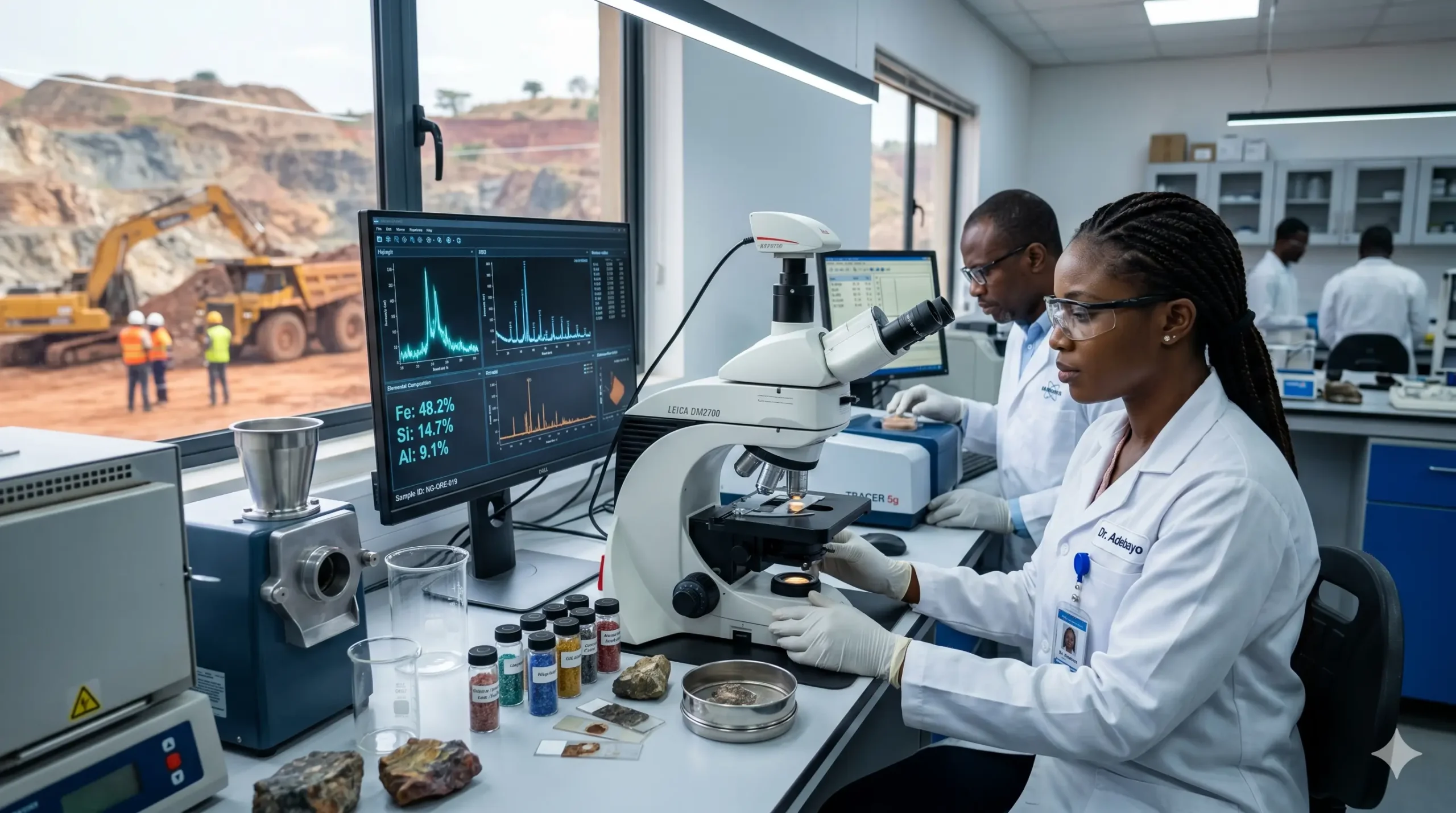
Mineral composition testing is one of the most important steps in the mining and mineral trading industry. Whether you are a small-scale miner, an exploration company, a mineral exporter, or an investor, understanding the true composition of your mineral sample helps you make better business decisions, avoid losses, and increase profitability. In Nigeria’s growing mining sector, mineral laboratory testing has become essential for verifying mineral quality, determining commercial value, meeting export requirements, and building trust with buyers. This guide explains how mineral composition testing works in Nigeria, why it matters, the common testing methods used, and what miners should expect during the process. What Is Mineral Composition Testing? Mineral composition testing is the scientific analysis of a mineral sample to determine: For example, a lithium ore sample may contain: Testing helps determine whether the mineral deposit is commercially valuable and suitable for processing, refining, or export. Why Mineral Testing Is Important 1. Determines the Value of Your Minerals The market value of minerals depends heavily on their composition and purity. Two samples may look similar physically but have completely different economic value after laboratory analysis. Without proper testing, miners risk: 2. Helps Buyers Trust Your Product Most serious mineral buyers request laboratory reports before making payment or entering long-term supply agreements. A professional laboratory report gives buyers confidence in: 3. Supports Export and Regulatory Compliance Mineral exports often require testing documentation and certificates that verify the contents of the shipment. Laboratory analysis can help support: 4. Reduces Financial Risk Mining operations can be expensive. Before investing heavily in excavation, equipment, or processing, testing helps confirm whether a deposit is economically viable. Common Minerals Tested in Nigeria Mining laboratories in Nigeria commonly analyze: As global demand for critical minerals increases, accurate testing has become more important than ever. Step-by-Step Process of Mineral Composition Testing Step 1: Sample Collection The first stage is collecting representative mineral samples from the mining site. Proper sampling is critical because inaccurate samples can produce misleading laboratory results. Samples may be collected from: A good sample should represent the actual mineral deposit as accurately as possible. Step 2: Sample Preparation Before testing begins, the laboratory prepares the sample by: This ensures consistency and improves testing accuracy. Sample contamination during preparation must be avoided to maintain reliable results. Step 3: Laboratory Analysis The prepared sample is then analyzed using specialized laboratory equipment and scientific methods. Common mineral testing methods include: X-Ray Diffraction (XRD) X-Ray Diffraction (XRD) is a laboratory technique used to identify the crystalline structure and mineral composition of a sample. It is commonly used in mining and geological analysis to determine: XRD is especially valuable in: Benefits of XRD include: For mining companies and mineral investors, XRD testing helps provide critical information about the composition and commercial potential of mineral deposits. Learn more about our X-Ray Diffraction facility from this recent post on our blog. If you are looking for where to run XRD in Nigeria, contact Zirconex Mining and Metal Laboratory today. Fire Assay Fire assay is widely used for precious metals such as: It is considered one of the most accurate methods for precious metal analysis. Atomic Absorption Spectroscopy (AAS) AAS measures the concentration of specific metals within a sample. It is commonly used for: Inductively Coupled Plasma (ICP) Analysis ICP testing provides highly detailed multi-element analysis. It is useful for: Understanding Your Laboratory Report After testing is completed, the laboratory issues a report containing: For example, a lithium report may show: Understanding these values helps determine: Common Problems That Affect Mineral Test Results Poor Sampling Bad sampling techniques can produce inaccurate results that do not represent the actual deposit. Sample Contamination Contamination can occur during: Using Unqualified Laboratories Inexperienced laboratories may produce inconsistent or unreliable reports. Choosing a professional mineral laboratory is essential for accurate testing and credibility. How to Choose a Reliable Mineral Laboratory in Nigeria When selecting a mineral testing laboratory, consider: A reliable laboratory should provide clear, transparent, and scientifically accurate reports. The Future of Mineral Testing in Nigeria Nigeria’s mining industry continues to grow rapidly, especially in critical minerals such as lithium and other battery materials. As international buyers demand higher quality standards, professional mineral testing will become even more important for: Mining businesses that prioritize proper laboratory testing are more likely to attract serious buyers and long-term opportunities. Conclusion Mineral composition testing plays a major role in modern mining operations. Accurate laboratory analysis helps miners determine mineral value, improve decision-making, reduce risk, and meet market standards. Whether you are exploring a new mining site, preparing minerals for export, or negotiating with buyers, professional laboratory testing provides the data needed to move forward with confidence. For mining companies operating in Nigeria, working with an experienced laboratory like Zirconex Mining and Metal Laboratory can help ensure accurate results, professional reporting, and better business outcomes in the competitive mineral industry.
Nigeria Advances Mineral Exploration with Zirconex Mining & Metal Laboratory’s New XRD Facility in Abuja
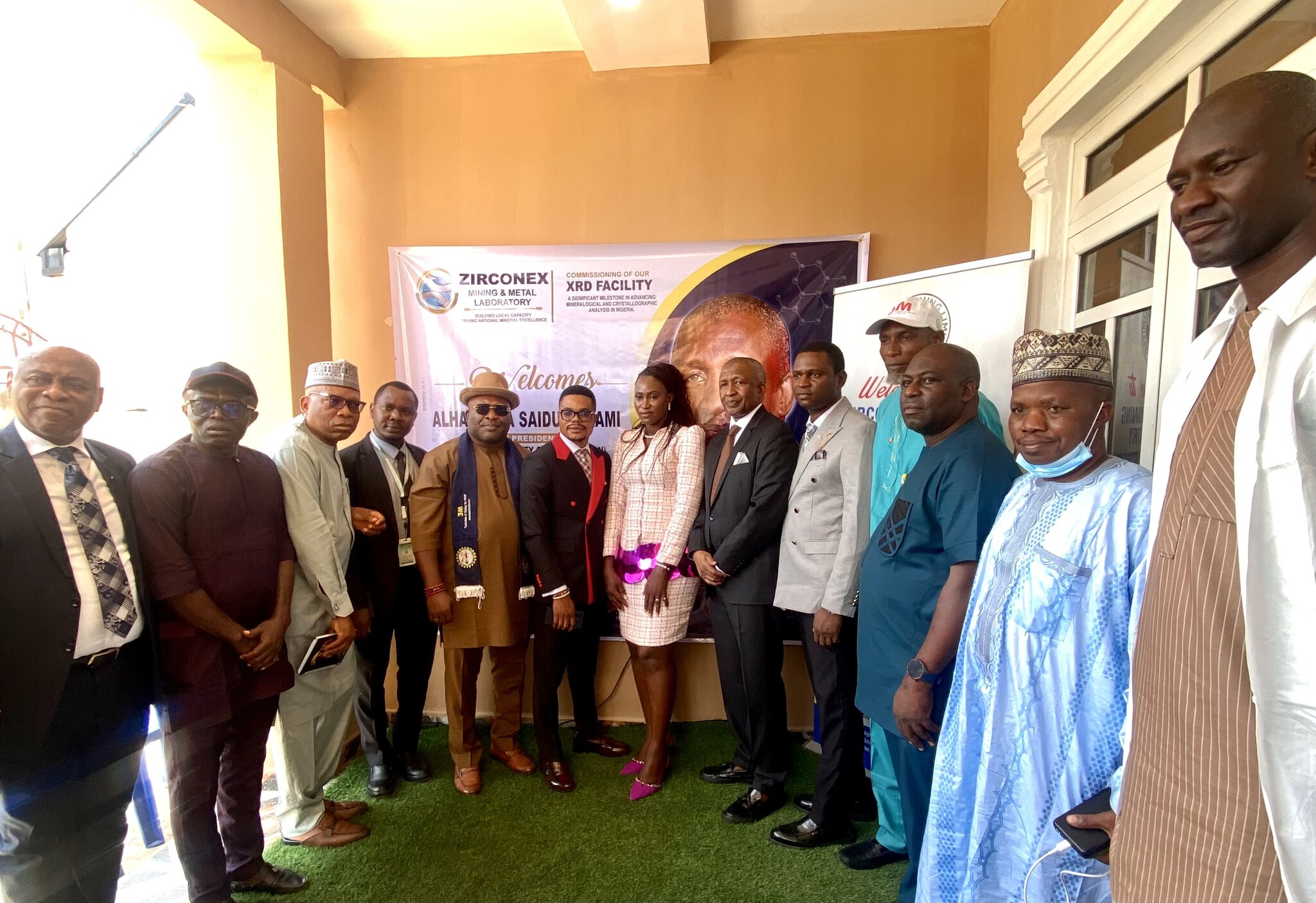
Nigeria’s mining and mineral exploration industry has reached a significant milestone with the commissioning of a state-of-the-art X-Ray Diffraction (XRD) facility by Zirconex Mining & Metal Laboratory in Abuja. The commissioning event brought together geoscientists, mining professionals, researchers, investors, and industry stakeholders, including the President of the Geological Society of Nigeria (GSN), Alhaji Uba Saidu Malami. The event marks an important step toward strengthening Nigeria’s capacity for advanced mineralogical analysis and improving confidence in the country’s solid minerals sector. For decades, Nigerian mining companies, geologists, and exploration firms depended heavily on foreign laboratories for specialized mineral analysis services such as X-Ray Diffraction (XRD). Samples often had to be shipped abroad for testing, resulting in expensive logistics, long turnaround times, project delays, and limited access to timely geological data. The establishment of a modern XRD laboratory in Nigeria changes that reality. What is X-Ray Diffraction (XRD) and Why is it Important? X-Ray Diffraction (XRD) is an advanced analytical technique used to identify the mineral composition and crystal structure of rocks, ores, soils, and industrial materials. In the mining industry, XRD analysis plays a crucial role in understanding mineral assemblages and determining the economic viability of mineral deposits. Accurate mineralogical data is essential for: Without reliable mineralogical analysis, mining companies face uncertainty in evaluating deposits and planning extraction processes. Investors and Competent Persons also require credible laboratory data before approving technical reports, resource estimates, or financing decisions. By offering XRD testing services locally, Zirconex Mining & Metal Laboratory is helping to close a critical gap in Nigeria’s mining and geoscience ecosystem. Reducing Dependence on Foreign Laboratories One of the biggest challenges faced by the Nigerian mining sector has been the lack of access to advanced laboratory testing facilities within the country. Sending samples abroad for mineral analysis often led to: The new XRD facility by Zirconex addresses these challenges by providing fast, reliable, and cost-effective mineralogical analysis services directly within Nigeria. This development will significantly improve the speed and efficiency of geological investigations while helping mining companies make informed technical decisions more quickly. Supporting Investment Confidence in Nigeria’s Mining Sector Reliable geological and mineralogical data is the foundation of every successful mining project. Investors rely heavily on accurate laboratory results before committing capital to exploration and mining operations. The commissioning of Zirconex’s XRD facility strengthens the chain of trust between: When laboratory data is accurate and internationally compliant, mining projects become more credible and attractive to both local and international investors. This is particularly important as Nigeria continues to position its solid minerals sector as a key contributor to economic diversification and industrial development. Commitment to ISO 17025 Standards A major highlight of Zirconex Mining & Metal Laboratory’s operations is its commitment to ISO 17025 standards, which represent the internationally recognized benchmark for testing and calibration laboratory competence. ISO 17025 compliance demonstrates: For mining companies, exploration firms, researchers, and government agencies, working with a laboratory that follows globally accepted quality standards increases confidence in analytical outcomes and project reporting. Zirconex’s commitment to these standards positions the laboratory as one of the emerging leaders in mineral analysis and mining laboratory services in Nigeria. Strengthening Local Capacity Development Beyond providing laboratory services, the new XRD facility also contributes to the development of local technical expertise in geoscience and mineral analysis. Nigeria’s mining industry requires skilled professionals, modern analytical infrastructure, and continuous technological advancement to compete globally. Investments like this help create opportunities for: By developing local analytical capacity, Nigeria can reduce reliance on external laboratories while building a stronger and more self-sufficient mining ecosystem. The Future of Geoscience and Mineral Analysis in Nigeria The commissioning of Zirconex Mining & Metal Laboratory’s XRD facility represents more than the launch of advanced equipment. It symbolizes progress, innovation, and a growing commitment to strengthening Nigeria’s geoscience and mining industries. As the demand for reliable mineral exploration data continues to grow, access to advanced analytical services within Nigeria will play a critical role in accelerating exploration success, improving resource evaluation, and attracting investment into the sector. The future of Nigeria’s mining industry will be shaped by strategic investments in technology, laboratory infrastructure, research, and professional collaboration. Zirconex Mining & Metal Laboratory is proud to be part of that transformation. About Zirconex Mining & Metal Laboratory Zirconex Mining & Metal Laboratory provides advanced mining laboratory and mineral analysis services for the mining, metals, and geoscience industries in Nigeria. Our services are designed to support exploration companies, mining operators, researchers, and investors with accurate, reliable, and internationally aligned analytical solutions. Our mission is to strengthen confidence in Nigeria’s mining sector through high-quality laboratory services, technical excellence, and innovative analytical capabilities.
Why Accurate Assay Results Matter in Nigeria’s Growing Mining Industry
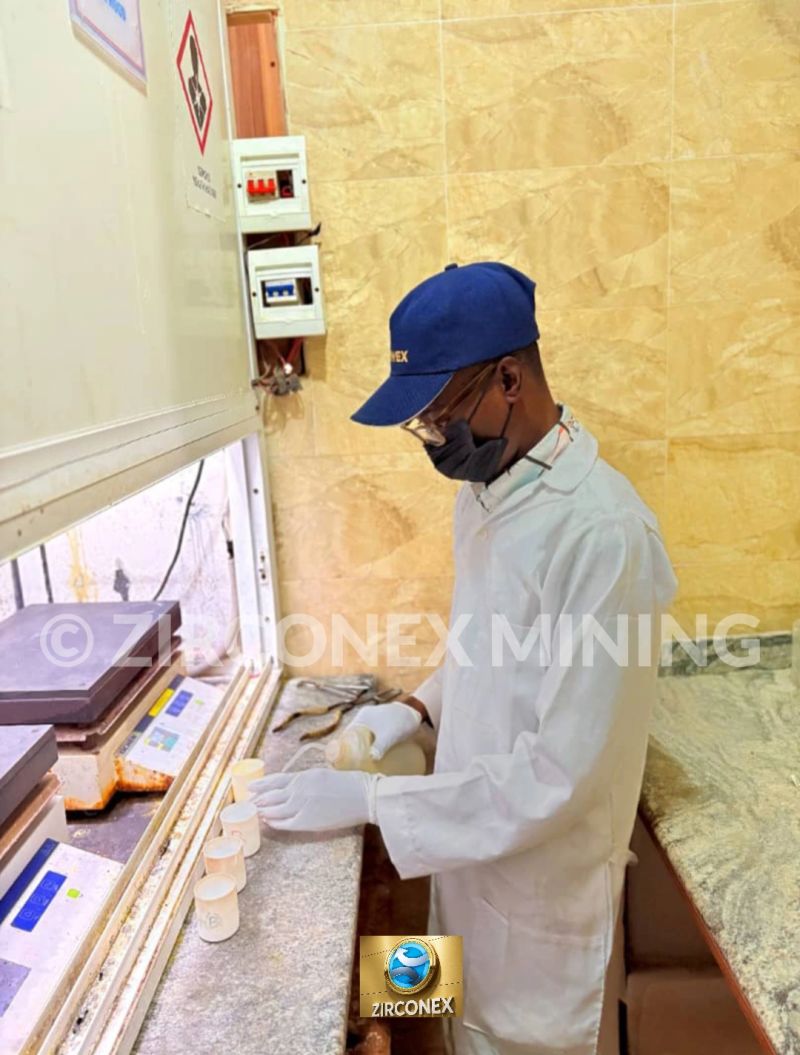
Nigeria’s mining sector is rapidly evolving, with increasing interest in critical minerals such as lithium, tin, rare earth elements, gold, and copper. As exploration activities expand across the country, one factor continues to determine the success of mining projects and mineral investments: accurate assay results. In the mining industry, decisions worth millions are often based on laboratory data. From exploration and resource estimation to mineral trading and export certification, reliable mineral analysis is essential for transparency, profitability, and investor confidence. Companies like Zirconex Mining & Metal Laboratory are helping to strengthen Nigeria’s mining ecosystem through professional sampling, geochemical testing, and laboratory analysis services. What Are Assay Results in Mining? Assay results are laboratory reports that determine the concentration and composition of minerals or metals within a sample. These results help mining companies, investors, and mineral traders understand the economic value of an ore deposit. Whether testing for lithium, gold, copper, tin, or rare earth elements, assay results provide the scientific data needed to make informed decisions in the mining industry. Modern mining laboratories use advanced analytical techniques such as: These techniques help ensure precision, repeatability, and compliance with international standards. The Importance of Proper Sampling Before laboratory analysis begins, proper sampling must be carried out. Poor sampling practices can produce misleading assay results, regardless of how advanced the laboratory equipment may be. In the mining industry, representative sampling is critical because it ensures that the analyzed material accurately reflects the actual mineral deposit. Professional mining laboratories follow strict QA/QC procedures, chain-of-custody documentation, and ethical sampling standards to maintain sample integrity. Effective sampling supports: Lithium in Nigeria: Why Reliable Mineral Analysis Is Essential The growing global demand for electric vehicle batteries and renewable energy storage has increased interest in lithium in Nigeria. Several exploration projects across the country have reported encouraging lithium assay results, highlighting Nigeria’s potential in the global critical minerals market. As lithium exploration expands, the need for trusted mining laboratory services becomes even more important. Accurate mineral analysis helps exploration companies: Reliable assay results also help prevent disputes, fraud, and inaccurate reporting within the mining industry. How Mining Laboratories Support Smarter Decisions A professional mining laboratory does more than generate numbers. It provides the technical foundation for decision-making throughout the mining value chain. Independent laboratories support mining operations through: Mineral Analysis Precise identification and accurate quantification of valuable minerals and elements. Geological Exploration Support Field sampling, geochemical analysis, and exploration data interpretation. Quality Assurance and Quality Control (QA/QC) Verification processes that improve confidence in laboratory results. Export Inspection and Certification Ensuring mineral exports meet regulatory and international trade requirements. Resource Evaluation Helping mining companies understand the commercial potential of mineral deposits. According to Zirconex Mining & Metal Laboratory, accurate geological exploration and laboratory analysis reduce uncertainty and help mining operators make informed business decisions. Building Trust Through Transparent Assay Results Transparency is becoming increasingly important in Nigeria’s mining sector. Investors, mineral buyers, and regulators now demand accurate, traceable, and verifiable laboratory reports. Professional mining laboratories help build industry trust through: These standards improve confidence in assay results and help protect stakeholders from inaccurate or manipulated reports. The Future of Mining Laboratory Services in Nigeria Nigeria’s solid minerals sector has enormous potential, especially in lithium, rare earth elements, tin, gold, and industrial minerals. However, unlocking this potential depends heavily on the availability of reliable mining laboratory services. As exploration activities increase, mining laboratories will continue to play a central role in: The future of the mining industry will rely not only on discovering minerals, but also on ensuring that mineral analysis and assay results are accurate, transparent, and globally trusted. Conclusion In today’s mining industry, accuracy and precision matter. From sampling and mineral analysis to assay results and export compliance, every stage of the process depends on reliable laboratory data. As demand for lithium in Nigeria and other critical minerals continues to rise, mining laboratories remain essential partners in helping exploration companies, investors, and exporters make informed decisions with confidence. Professional assay services are no longer optional — they are the backbone of sustainable and profitable mining operations.