



Zirconex Mining & Metal Laboratory Now Offers Geotechnical Soil Testing Services Reliable construction and engineering projects begin with a clear understanding of the ground beneath them. From assessing soil properties to determining compaction and strength, geotechnical soil testing provides essential information for making informed engineering decisions. Zirconex Mining & Metal Laboratory is pleased to announce the availability of geotechnical soil testing services, expanding our laboratory capabilities to support construction, civil engineering, and other ground-related projects. Our services are designed to provide useful laboratory data to engineers, construction professionals, consultants, contractors, and project developers who require reliable information about soil characteristics and behaviour. What Is Geotechnical Soil Testing? Geotechnical soil testing is the process of examining soil samples to determine their physical and engineering properties. These properties help professionals understand how soil may behave under different conditions, including loading, compaction, and changes in moisture content. The results support soil classification, construction planning, foundation assessment, earthworks, and other engineering activities where soil conditions must be properly understood. Conducting appropriate soil tests before and during construction can help identify potential ground-related challenges and provide the information needed for sound engineering decisions. Geotechnical Soil Tests Available at Zirconex At Zirconex Mining & Metal Laboratory, we offer a range of geotechnical soil tests to support soil investigation and engineering requirements. 1. Particle Size Analysis by Sieve and Hydrometer Particle size analysis determines the distribution of different soil particle sizes within a sample. Sieve analysis is commonly used for coarser particles, while hydrometer analysis helps determine the distribution of finer particles. The results help classify soils and understand their composition, which is important in evaluating soil suitability for various construction and engineering applications. 2. Atterberg Limits Atterberg limits are used to assess the consistency and plasticity characteristics of fine-grained soils. The tests include the liquid limit and plastic limit, which help engineers understand how certain soils respond to changes in moisture content. These properties are useful in soil classification and in assessing potential engineering challenges associated with clay-rich soils. 3. Moisture Content Test The moisture content test determines the amount of water present in a soil sample relative to its dry mass. Moisture content is an important consideration in compaction, earthworks, and the assessment of soil behaviour. It also helps engineers evaluate whether soil conditions are suitable for particular construction activities. 4. Specific Gravity Test Specific gravity testing determines the ratio of the density of soil solids to the density of water at a specified temperature. This property is used in several geotechnical calculations, including those involving soil phase relationships, void ratio, and other parameters required for engineering assessment. 5. Shrinkage Limit Test The shrinkage limit test determines the moisture content below which further drying of a soil does not result in a significant reduction in its volume. This test is particularly relevant when evaluating fine-grained soils that may undergo volume changes as their moisture content varies. 6. Standard and Modified Proctor Compaction Tests Compaction tests establish the relationship between soil moisture content and dry density under specified compactive effort. The Standard Proctor and Modified Proctor tests help determine the optimum moisture content and maximum dry density of soil under their respective test conditions. These results are important for earthworks, road construction, embankments, and other projects where achieving the required level of soil compaction is essential. 7. Direct Shear Test The direct shear test evaluates the shear strength characteristics of soil under specified test conditions. The results can help determine parameters used in assessing the resistance of soil to sliding and other shear-related failure mechanisms. These parameters are relevant to engineering assessments involving slopes, retaining structures, and foundations. 8. Unconfined Compression Test The unconfined compression test measures the compressive strength of suitable cohesive soil specimens without lateral confinement. It is commonly used to estimate the unconfined compressive strength of cohesive soils and, where appropriate, their undrained shear strength. The results provide useful information for geotechnical assessments involving the strength and behaviour of suitable fine-grained soils. 9. Rapid Moisture Testing Rapid moisture testing provides a quicker means of assessing soil moisture content for applications where timely information is required. It can support construction site activities and compaction control, depending on the test method used and the requirements of the project. Why Is Geotechnical Soil Testing Important? Understanding soil properties is an essential part of responsible construction and engineering practice. The right tests provide data that help project teams evaluate ground conditions and make decisions based on measured soil characteristics rather than assumptions. Geotechnical soil testing can support: The appropriate tests depend on the type of soil, the purpose of the investigation, and the applicable engineering specifications. Laboratory results should be interpreted alongside site investigation findings and other relevant project information. Your Partner for Geotechnical Soil Testing in Nigeria At Zirconex Mining & Metal Laboratory, we understand the importance of dependable laboratory data in supporting technical assessments and project decisions. Our geotechnical soil testing services are intended to support engineers, construction companies, contractors, consultants, and organisations involved in building, road construction, earthworks, and infrastructure development. Whether you require particle size distribution, Atterberg limits, compaction testing, or soil strength assessment, our team is available to discuss your testing requirements and help identify the appropriate laboratory tests for your project. We encourage clients to contact us before submitting samples so that we can discuss sample preparation, submission requirements, applicable test methods, turnaround expectations, and quotations. Contact Zirconex for Geotechnical Soil Testing Do you need geotechnical soil testing for a construction, civil engineering, or infrastructure project? Contact Zirconex Mining & Metal Laboratory to discuss your requirements and obtain a quotation. Phone: +234 905 023 1994 Our team looks forward to supporting your projects with laboratory testing services that contribute to informed engineering decisions. Zirconex Mining & Metal Laboratory — Supporting better engineering decisions through reliable laboratory testing.
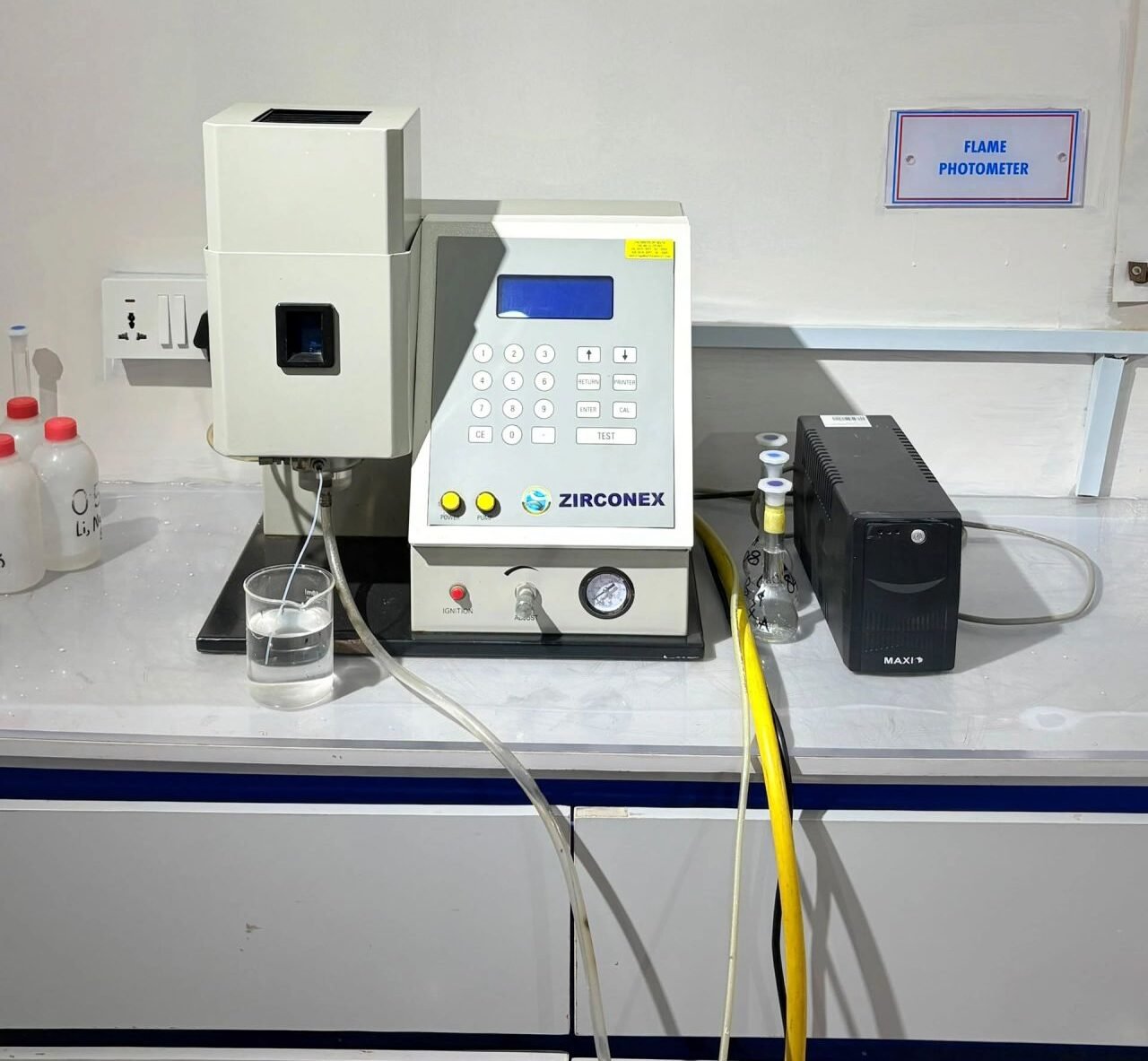
Flame Photometer: Turning Mineral Samples into Meaningful Data
In mineral exploration and analytical chemistry, reliable results begin with selecting the right analytical technique. Before a laboratory result can support mineral characterization, exploration decisions, resource evaluation, or quality assessment, a geological sample must pass through a carefully controlled process of preparation, measurement, and quality assurance. One of the analytical instruments used for the quantitative determination of selected metallic elements is the flame photometer. By measuring the characteristic light emitted by excited atoms in a flame, a flame photometer can provide quantitative information about certain elements present in a prepared sample. At Zirconex Mining & Metal Laboratory, analytical instruments such as the flame photometer form part of a systematic laboratory workflow designed to transform geological and mineral samples into dependable analytical data. What Is a Flame Photometer? A flame photometer is an analytical instrument used to determine the concentration of selected elements based on the light they emit when introduced into a flame. When a prepared sample is introduced into the flame, the heat excites atoms of certain elements. As these atoms return to a lower energy state, they release energy in the form of light at characteristic wavelengths. The intensity of this emitted light can be measured and related to the concentration of the element in the sample. This principle makes flame photometry useful for the quantitative analysis of certain elements, particularly those that produce strong and measurable flame emissions. Depending on the instrument configuration and analytical method, flame photometers can be used for elements such as: The specific elements that can be measured depend on the instrument, calibration procedure, sample matrix, and analytical method being used. How Does Flame Photometry Work? The basic process behind flame photometry involves several important stages. First, the geological or mineral sample must be properly prepared. Depending on the nature of the material and the analytical procedure, this may involve crushing, pulverization, weighing, digestion, dissolution, filtration, or other preparation steps. The prepared sample is then introduced into the flame. The heat excites atoms of the target elements, causing them to emit light at characteristic wavelengths. The instrument detects this emitted light and measures its intensity. Through calibration against standards of known concentration, the measured signal can be related to the concentration of the element in the sample. In simple terms: Sample preparation → Introduction into flame → Atomic excitation → Light emission → Detection → Calibration → Quantitative result Although the measurement itself may appear straightforward, the quality of the final result depends on the entire analytical workflow. Why Sample Preparation Matters A flame photometer cannot compensate for a poorly prepared sample. Geological materials are naturally heterogeneous. A mineral sample may contain different minerals, particle sizes, textures, and elemental concentrations. If the portion submitted for analysis is not representative of the original material, the resulting measurement may not accurately reflect the sample. Proper sample preparation helps produce material that is sufficiently uniform and suitable for the selected analytical method. Important preparation steps may include: These steps help reduce sources of variability before the sample reaches the analytical instrument. The Importance of Calibration Calibration is another critical part of flame photometry. The instrument response must be related to known concentrations of the target element using appropriate calibration standards. This provides the basis for converting the measured light intensity into a quantitative result. Proper calibration helps the laboratory identify and control potential sources of analytical variation. Depending on the method and sample matrix, additional quality-control measures may include blanks, reference materials, duplicates, and repeat measurements. The objective is not simply to obtain a number from the instrument, but to establish confidence that the reported number is supported by a controlled analytical process. Applications of Flame Photometry in Mineral Analysis Elemental information generated through flame photometry can contribute to several areas of geological and mining-related investigation. 1. Mineral Characterization Elemental concentrations can provide useful information for understanding the composition of geological and mineral samples. When combined with other analytical techniques, flame photometry results can contribute to a broader understanding of the chemical characteristics of a sample. 2. Mineral Exploration Exploration programmes depend on analytical data to help characterize samples collected from different locations. Elemental measurements can contribute to geochemical datasets used alongside geological mapping, sampling, mineralogical studies, and other exploration information. 3. Resource Evaluation Reliable analytical results are an important component of mineral resource investigations. Where the analytical method is appropriate for the elements and concentrations being investigated, quantitative elemental data can contribute to the evaluation and characterization of mineralized materials. 4. Grade and Quality Assessment Determining the concentration of selected elements can support the assessment of the quality and composition of mineral materials. The usefulness of the result, however, depends on appropriate sampling, validated methodology, calibration, and quality control. 5. Process Monitoring and Beneficiation Studies Elemental analysis can also support mineral processing investigations. Analytical data from feed materials, concentrates, tailings, or other process streams may help laboratories and processing teams evaluate changes in elemental composition during beneficiation and related processes. From Mineral Sample to Reliable Data A laboratory result is never just a number produced by an instrument. Behind every reported result is a chain of activities that begins with sampling and continues through sample preparation, analytical measurement, quality control, data review, and reporting. For flame photometry, important considerations include: Representative samplingThe submitted sample should adequately represent the material being investigated. Proper sample preparationThe sample must be prepared according to the requirements of the analytical method. Accurate measurementBalances, glassware, volumetric equipment, and other laboratory equipment must be used appropriately and maintained under controlled conditions. Instrument calibrationCalibration with suitable standards provides the foundation for quantitative measurement. Quality controlBlanks, duplicates, reference materials, and other quality-control procedures can help monitor analytical performance where applicable. Data reviewResults should be examined for consistency and potential anomalies before reporting. This complete workflow is what helps transform a physical mineral sample into analytical information that can support technical investigations. The Role of Analytical Instruments at Zirconex Mining Laboratory At Zirconex Mining & Metal Laboratory, analytical instruments are part of a broader
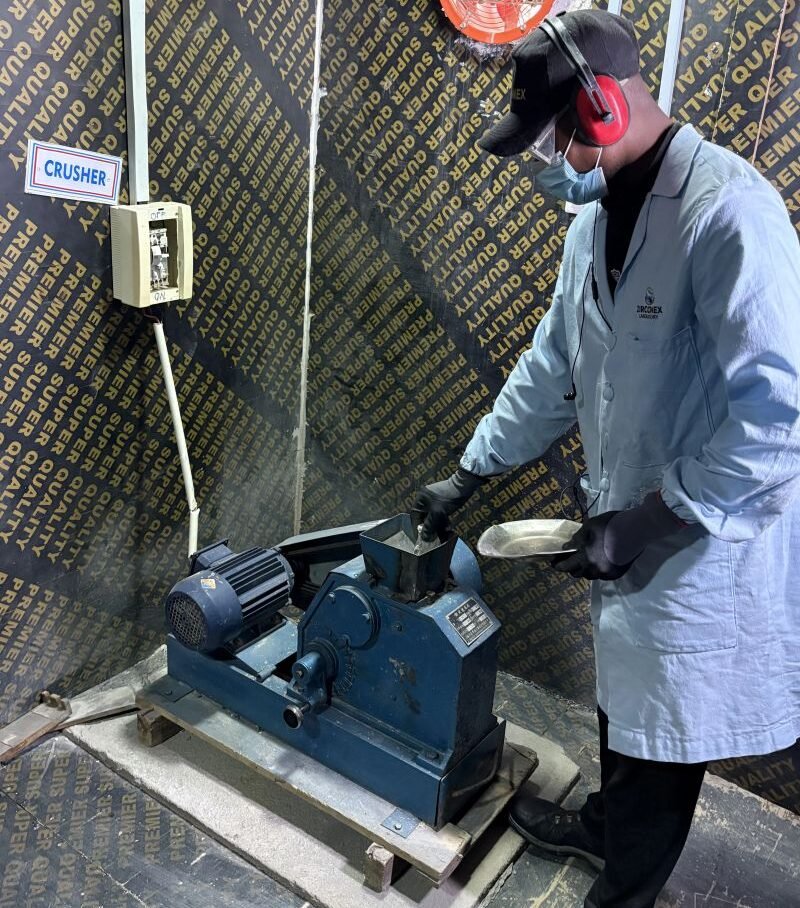
Sample Crushing: The Foundation of Reliable Geochemical Analysis
Accurate geochemical analysis begins long before a sample reaches the analytical instrument. Behind every reliable laboratory result is a carefully controlled sample preparation process designed to preserve sample integrity, improve representativeness, and produce material suitable for analysis. One of the most important stages in this process is sample crushing. At Zirconex Mining & Metal Laboratory, sample crushing forms part of a controlled workflow for preparing geological and mineral samples for subsequent laboratory procedures. By reducing the size of rock and mineral samples, crushing prepares the material for further stages such as pulverization, homogenization, and chemical analysis. What Is Sample Crushing? Sample crushing is the mechanical process of reducing large pieces of geological or mineral material into smaller, more manageable particles. Geological samples collected during exploration, mining, quarrying, or other field activities can vary considerably in size. Before these samples can undergo detailed laboratory analysis, they generally need to be reduced to an appropriate particle size. A laboratory crusher applies mechanical force to the sample, breaking it into smaller fragments. The resulting crushed material can then proceed to subsequent preparation stages, depending on the analytical method and laboratory workflow. Crushing is therefore more than simply making a sample smaller. It is an important step in producing material that can be processed consistently and ultimately used to generate meaningful analytical data. Why Is Sample Crushing Important in Geochemical Analysis? The quality of an analytical result depends not only on the analytical instrument but also on the quality of the sample presented to it. Poorly prepared samples can introduce variability and make it more difficult to obtain a representative portion for further analysis. Proper crushing helps establish a consistent starting point for the next stages of sample preparation. 1. Reduces Particle Size The first objective of crushing is to reduce the size of the original sample. Large rocks and mineral specimens cannot normally proceed directly to fine pulverization or other analytical preparation processes. Crushing breaks the material into smaller fragments that can be processed more efficiently. 2. Supports Sample Homogeneity Geological materials are often heterogeneous, meaning that different portions of the same rock or mineral sample may contain different mineral phases or concentrations of elements. Controlled size reduction helps prepare the material for subsequent homogenization and sampling. This is important when only a small portion of the original sample will eventually be used for analysis. 3. Improves Representativeness A laboratory analysis is performed on a portion of the submitted material. That portion needs to represent the original sample as closely as practical. A properly controlled sample-preparation process helps reduce the potential for uneven particle distribution and supports the production of a representative analytical portion. 4. Prepares Samples for Pulverization Crushing is commonly followed by pulverization, where the crushed material is reduced to a much finer particle size. The crushing stage therefore provides an essential transition between the original geological sample and the fine material required for many analytical procedures. Sample Crushing and Contamination Control Contamination is an important consideration throughout geological sample preparation. Because crushed material may subsequently be subjected to sensitive analytical techniques, unwanted material introduced during preparation can potentially affect the analytical result. For this reason, crushing equipment and the surrounding workflow require appropriate controls. Equipment should be properly maintained and cleaned according to laboratory procedures, while sample handling should be carried out carefully to minimize the risk of cross-contamination between samples. The objective is simple: the material being analysed should accurately reflect the sample that was submitted to the laboratory. Safety During Sample Crushing Sample crushing involves mechanical equipment and may generate dust and noise. Appropriate safety measures are therefore an essential part of the crushing process. Laboratory personnel working in sample-preparation areas may require appropriate personal protective equipment (PPE), including: Good laboratory practice also involves following established operating procedures, maintaining equipment properly, and keeping the work area clean and controlled. Safety is not separate from quality. A well-managed sample-preparation environment supports both the protection of laboratory personnel and the consistency of laboratory operations. From Crushing to the Final Analytical Result Sample crushing is only one stage of a broader sample-preparation workflow. Depending on the type of material and analytical requirement, a typical geological sample may pass through several stages, including: Sample Receipt → Crushing → Splitting/Homogenization → Pulverization → Analytical Preparation → Instrumental Analysis → Reporting Each stage contributes to the quality of the final result. For example, crushing reduces the initial particle size, while pulverization produces a much finer and more homogeneous material. Subsequent analytical preparation then ensures that the sample is suitable for the specific analytical technique being applied. This means that even the most advanced analytical instrument cannot compensate for every problem introduced during poor sample preparation. Quality Starts Before the Instrument Modern geochemical laboratories rely on sophisticated analytical equipment to determine the chemical and mineralogical characteristics of geological materials. However, instrument performance is only one part of the equation. The quality of the sample entering the instrument matters just as much. A controlled crushing process helps establish the foundation for the preparation stages that follow. Attention to particle-size reduction, sample integrity, contamination control, equipment condition, safety, and consistency all contribute to a reliable laboratory workflow. At Zirconex Mining & Metal Laboratory, we recognize that dependable analytical results begin with disciplined sample preparation. From the moment a geological sample enters the laboratory to the point where the final analytical result is reported, every stage matters. Conclusion Sample crushing is a fundamental step in geological and geochemical sample preparation. By reducing geological and mineral samples to a suitable particle size, it facilitates subsequent pulverization, homogenization, and analytical preparation. When carried out under controlled laboratory conditions, crushing supports sample representativeness, helps manage contamination risks, and contributes to the consistency and reproducibility of downstream analysis. The principle is straightforward: Quality preparation. Reliable analysis. Trusted results. At Zirconex Mining & Metal Laboratory, we understand that reliable geochemical analysis starts long before the analytical instrument is switched on.
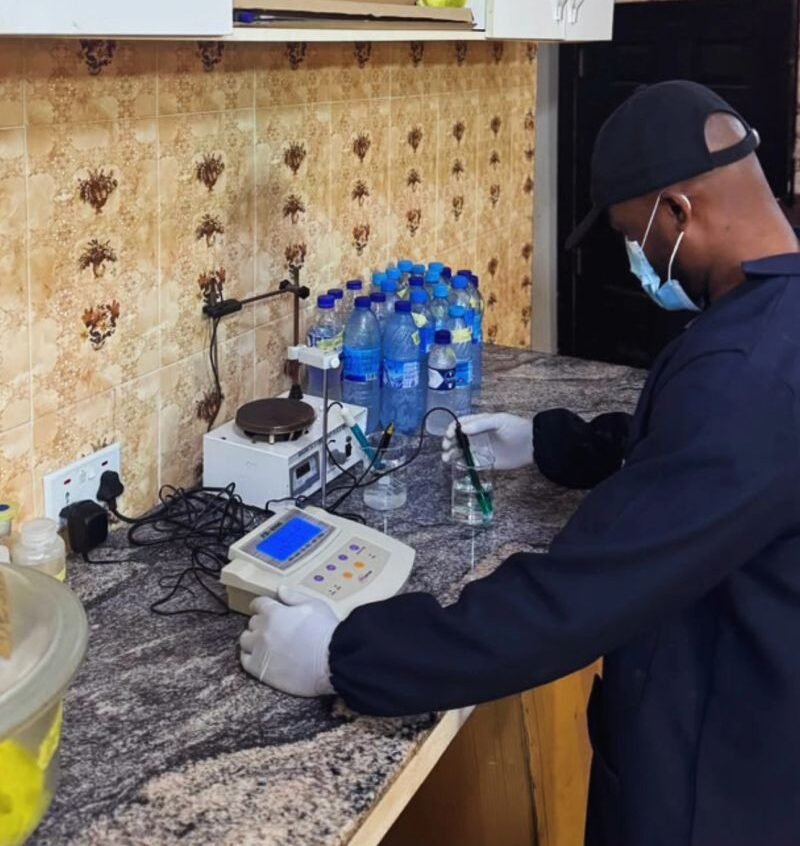
Precision in Mineral Analysis
In mineral and environmental laboratory analysis, reliable results do not begin when the final report is issued. They begin much earlier—with careful measurement, proper sample handling, appropriate analytical methods, and disciplined laboratory practice. At Zirconex Mining & Metal Laboratory, we understand that the quality of analytical data depends on the precision and consistency applied throughout the laboratory workflow. Every measurement, sample preparation step, instrument reading, and quality control procedure contributes to the reliability of the final result. Why Precision Matters in Laboratory Analysis Laboratory analysis often involves measuring relatively small quantities of materials and determining the concentration or characteristics of specific elements, minerals, or chemical parameters. Even small variations in measurement, preparation, or handling can affect the final analytical result. Precision is therefore an essential part of good laboratory practice. Accurate weighing, appropriate sample vessels, properly maintained instruments, calibrated measuring equipment, and careful observation by trained analysts all contribute to producing dependable data. For mineral and environmental testing, reliable analytical results can support important decisions relating to: When laboratory data is used to make technical or commercial decisions, confidence in the quality of that data is essential. Precision Begins at the Laboratory Bench The laboratory bench is where many critical analytical activities take place. An analyst may work with laboratory glassware, sample vessels, analytical probes, balances, and other specialized equipment as part of a controlled analytical procedure. Each stage requires attention to detail. From accurately weighing a sample to transferring materials, preparing solutions, operating analytical equipment, and monitoring instrument performance, laboratory personnel must follow established procedures carefully. The objective is not simply to obtain a numerical result. It is to obtain a result that is reliable, reproducible, and representative of the sample being tested. The Importance of Accurate Measurement Measurement is fundamental to analytical chemistry. Laboratory balances must provide appropriate accuracy and be used correctly. Volumetric equipment must be suitable for the required measurement. Instruments need to be operated according to established procedures, while samples must be handled in a manner that minimizes contamination, loss, or other sources of error. Good measurement practice helps reduce unnecessary variation and improves confidence in analytical results. This is particularly important when laboratory results are being compared across different samples, locations, time periods, or stages of a mining or environmental project. Sample Preparation and Handling Before a sample reaches an analytical instrument, it may pass through several preparation stages. Depending on the nature of the material and the analytical method being used, sample preparation can include drying, crushing, pulverization, weighing, digestion, fusion, dilution, or other procedures. The purpose is to produce a test portion that is suitable for the selected analytical method while maintaining the integrity and representativeness of the original sample. Poor preparation can introduce variability into an otherwise well-controlled analytical process. This is why sample preparation and handling are treated as important components of laboratory quality. The Role of Analytical Equipment Modern mineral and environmental laboratories rely on specialized equipment to perform a wide range of analytical procedures. However, having sophisticated equipment alone does not guarantee reliable results. Equipment must be appropriate for its intended application, properly operated, maintained, and monitored. Where applicable, calibration and performance checks help ensure that instruments continue to operate within defined requirements. At Zirconex Mining & Metal Laboratory, equipment performance forms part of our broader approach to laboratory quality and analytical reliability. Competent Personnel Make a Difference Laboratory instruments are operated by people, and competent personnel are essential to the analytical process. Analysts need an understanding of laboratory procedures, sample characteristics, measurement principles, equipment operation, safety requirements, and quality control practices. Careful observation and adherence to established procedures can help identify potential problems before they affect the final result. For this reason, laboratory competence extends beyond simply knowing how to operate an instrument. It involves understanding the complete analytical workflow and recognizing factors that may influence the quality of the data produced. Quality Assurance and Quality Control in Laboratory Testing Quality assurance and quality control (QA/QC) are important elements of dependable laboratory analysis. QA/QC practices can help laboratories monitor analytical performance, identify potential sources of variation, and maintain consistency in testing. Depending on the analytical procedure, quality control measures may include appropriate blanks, reference materials, duplicates, calibration checks, control samples, equipment checks, and other established procedures. These measures provide additional confidence that the analytical process is performing as expected. At Zirconex, our approach to analytical work emphasizes the importance of competent personnel, suitable analytical methods, equipment performance, careful sample handling, and robust QA/QC practices. Reliable Data Supports Better Decisions Laboratory results are often more than numbers on a report. They can become part of the technical information used to make decisions. In mining and exploration, analytical data may contribute to understanding the composition and characteristics of geological materials. In mineral processing, laboratory results can support process evaluation and quality control. Environmental laboratory data can also contribute to assessment and monitoring activities. For these applications, the reliability of the underlying analytical data is critical. This is why quality should be considered throughout the laboratory process rather than only at the reporting stage. Zirconex Mining & Metal Laboratory: Precision, Integrity, Excellence At Zirconex Mining & Metal Laboratory, we recognize that reliable analytical results are built through a combination of sound procedures, appropriate technology, competent personnel, careful measurement, and effective quality management. Our commitment is reflected in three principles: Precision. Integrity. Excellence. From the laboratory bench to the final analytical report, we remain focused on producing quality data that can support mining, exploration, mineral processing, environmental, and quality-control applications. Because in analytical chemistry, the reliability of the result starts long before the result is reported. Conclusion Precision is not a single step in laboratory analysis. It is a continuous principle that runs through the entire analytical workflow—from sample preparation and measurement to instrument operation, quality control, data review, and reporting. By paying close attention to each stage, laboratories can improve the consistency and reliability of the data they produce. At Zirconex Mining & Metal Laboratory, we believe that dependable
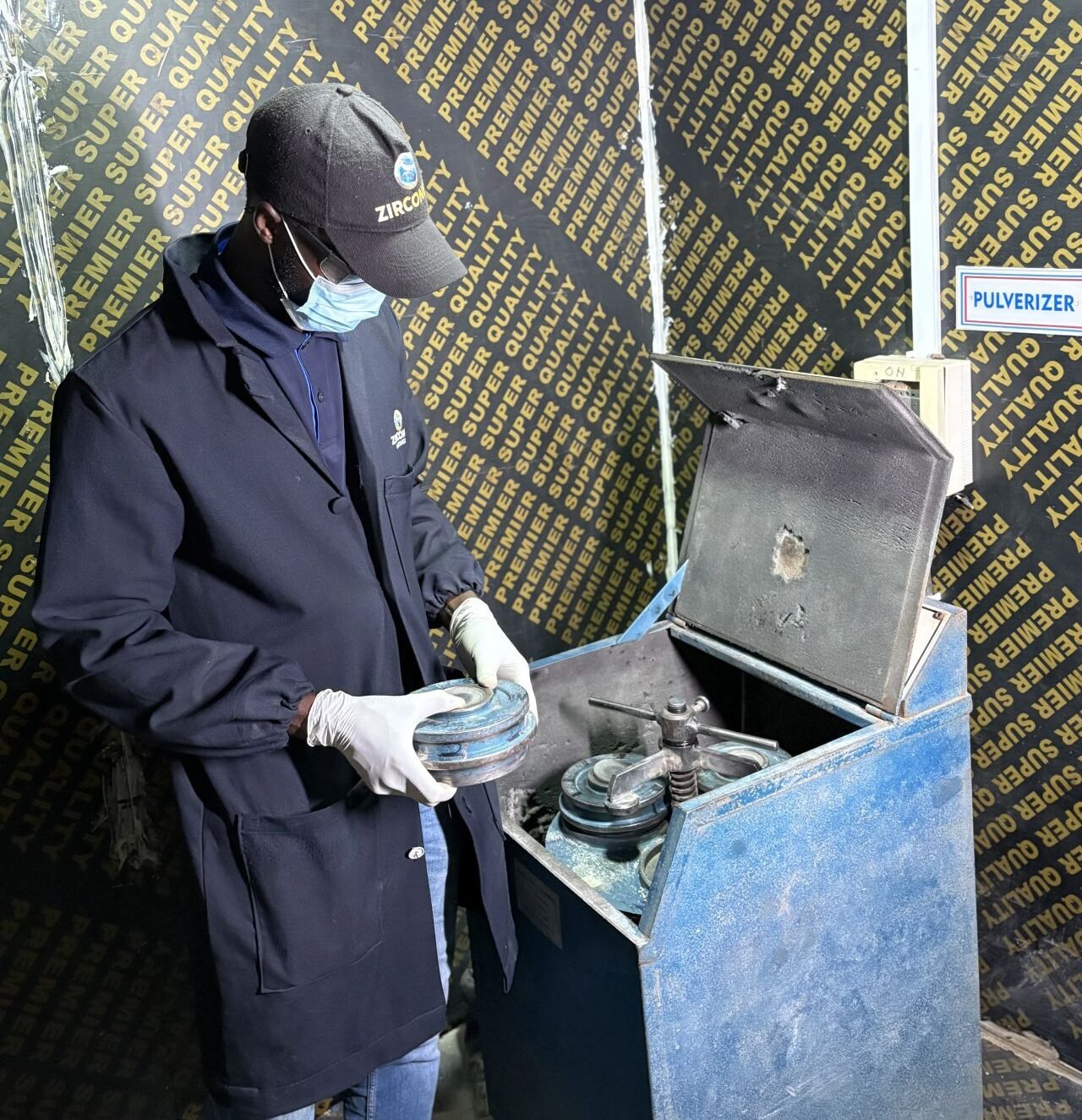
Sample Preparation: Pulverization in Geochemical Analysis
In geochemical analysis, obtaining reliable and accurate analytical results does not begin with the laboratory instrument. It begins much earlier—with proper sample preparation. Before a geological sample can be subjected to chemical or mineralogical analysis, it often needs to undergo several preparation stages. One of the most important of these is pulverization, a process in which a crushed geological sample is reduced to a fine and relatively homogeneous material suitable for subsequent laboratory analysis. At Zirconex Mining & Metal Laboratory, we recognize that every stage of the analytical workflow can influence the quality and reliability of the final result. That is why careful sample preparation is an essential part of our laboratory process. What Is Pulverization in Geochemical Analysis? Pulverization is the process of reducing a previously crushed geological sample into a much finer particle size using specialized laboratory equipment. Geological materials such as rock, ore, soil, sediment, and mineral samples are naturally heterogeneous. A hand-sized rock, for example, may contain several different minerals distributed unevenly throughout the sample. If only a small portion of that material is selected for analysis without adequate preparation, the portion may not accurately represent the composition of the original sample. Pulverization helps address this challenge by producing a finer and more uniformly distributed material from which an analytical portion can be obtained. Why Is Pulverization Important? The objective of sample preparation is not simply to make a geological sample smaller. It is to prepare the material in a way that supports representative, reproducible, and dependable analytical results. Proper pulverization offers several important benefits. 1. Improves Sample Homogeneity A geological sample can contain minerals and elements that are unevenly distributed. Reducing the material to a fine particle size helps improve its homogeneity. A more homogeneous sample makes it easier to obtain a representative portion for subsequent analysis. 2. Helps Produce a Representative Analytical Portion Laboratory analysis is normally performed on a relatively small portion of the original geological sample. This creates an important requirement: the analytical portion must adequately represent the larger sample. If a sample has not been sufficiently pulverized and homogenized, there is a greater possibility that the portion selected for analysis could contain an unusual concentration of particular minerals or elements simply because of the natural heterogeneity of the material. Effective pulverization helps reduce this source of variability. 3. Supports Consistent Analytical Results Particle size can influence how effectively a sample is processed and analyzed. Producing material within the required particle-size range helps create more consistent conditions for subsequent analytical procedures. Depending on the analytical method, finely prepared material may be required for techniques such as geochemical elemental analysis or mineralogical characterization. 4. Facilitates Subsequent Laboratory Analysis Pulverization is an intermediate step within a broader sample-preparation workflow. Depending on the type of sample and analytical requirement, the workflow may include: Sample receipt → drying → crushing → splitting → pulverization → homogenization → analysis The exact procedure can vary according to the nature of the sample and the analytical method being used. Pulverization and Sample Integrity While reducing a sample to a fine powder is important, maintaining the integrity of the sample during preparation is equally critical. A laboratory must ensure that the pulverization process does not introduce materials that could affect the analytical result. One important consideration is cross-contamination. For example, residual material from a previously processed sample may remain on the surfaces of pulverizing equipment. If the equipment is not properly cleaned before processing another sample, material from the first sample could be introduced into the second. This can potentially compromise the integrity of the analytical sample. Equipment Cleaning Is Essential Careful cleaning of pulverization equipment between samples is therefore an important quality-control practice. After processing a sample, equipment and relevant contact surfaces should be appropriately cleaned to minimize the possibility of material being carried over into the next sample. This is particularly important when dealing with samples that may contain elements or minerals of interest at very different concentrations. Maintaining clean equipment helps protect the identity and integrity of individual samples throughout the preparation process. From Crushed Rock to Fine Powder Pulverization should be viewed as part of a controlled sample-preparation process rather than an isolated mechanical operation. A typical geological sample may initially arrive at the laboratory as a large rock, drill-core interval, soil sample, or other bulk material. The sample may first be dried where necessary and reduced through crushing. Following crushing and appropriate sample division, a selected portion can then be pulverized to produce a finer material suitable for the required analytical procedure. The quality of each stage contributes to the quality of the next. If sample preparation is inadequate, even highly sophisticated analytical equipment cannot necessarily compensate for a sample that is poorly prepared or unrepresentative. The Role of Sample Preparation in Geochemical Analysis Geochemical analysis is used to determine the elemental or chemical characteristics of geological materials. The results can support activities such as: In each of these applications, analytical data may contribute to important technical decisions. For this reason, confidence in the result depends not only on the analytical instrument and method but also on the quality of the sample that enters the analytical process. Good analytical science starts with good sample preparation. Quality Control from Preparation to Analysis Reliable laboratory work requires attention to the entire analytical workflow. At Zirconex Mining & Metal Laboratory, sample preparation is treated as an important component of the overall quality process. From receiving and handling samples to crushing, pulverization, and subsequent analysis, procedures must be carried out carefully to minimize avoidable sources of error. This approach helps ensure that the material submitted for analysis is properly prepared and suitable for the intended analytical method. Pulverization at Zirconex Mining & Metal Laboratory At Zirconex Mining & Metal Laboratory, we understand that dependable geochemical results are built on attention to detail at every stage of the laboratory workflow. Our sample-preparation processes are designed to produce appropriately prepared geological materials for subsequent laboratory analysis, while careful equipment cleaning

ICCON Leadership Visits Zirconex Mining & Metal Laboratory
Zirconex Mining & Metal Laboratory was honoured to welcome the leadership of the Institute of Chartered Chemists of Nigeria (ICCON) during a memorable visit to our facility on 13 August 2026. The visit provided an important opportunity for professional engagement, knowledge exchange and discussions around the role of competent laboratories in supporting the growth and development of Nigeria’s chemistry, mining, environmental and industrial sectors. ICCON Leadership Visits Zirconex The delegation from the Institute of Chartered Chemists of Nigeria (ICCON), the statutory body responsible for the regulation and professional development of the chemistry profession in Nigeria, was led by the newly appointed Acting Registrar/CEO, Chemist Reuben Idongesit Akwaowo, alongside members of his team. During the visit, the ICCON delegation toured Zirconex Mining & Metal Laboratory and gained insight into our laboratory operations, analytical capabilities, quality-management systems and professional approach to laboratory testing and consultancy services. The engagement also provided an opportunity to discuss the importance of maintaining high professional and technical standards in laboratory practice, particularly as demand continues to grow for reliable analytical data across Nigeria’s mining, environmental and industrial sectors. Showcasing Our Laboratory Capabilities At Zirconex, we understand that reliable laboratory results are essential for sound technical and business decisions. Our facility is designed to support analytical requirements across areas including mineral and mining analysis, environmental testing, water quality assessment and other laboratory services. Through appropriate analytical methods, quality-management practices and professional expertise, we remain focused on producing results that clients and industry stakeholders can confidently use. The visit by the ICCON leadership allowed us to showcase our commitment to these principles and to demonstrate the systems and practices that underpin our laboratory operations. Strengthening Professional Chemistry Practice in Nigeria The engagement with ICCON also highlighted the importance of collaboration between professional regulatory institutions and analytical laboratories. As Nigeria continues to develop its mining, manufacturing, environmental and industrial sectors, the need for competent chemists, properly managed laboratories and dependable analytical data becomes increasingly important. Professional institutions such as ICCON play an important role in promoting ethical conduct, professional competence and adherence to appropriate standards within the chemistry profession. Zirconex is proud to support this broader objective through our commitment to analytical excellence, ethical laboratory practice, quality management and continuous professional development. Congratulating Chemist Reuben Idongesit Akwaowo We warmly congratulate Chemist Reuben Idongesit Akwaowo on his appointment as the Acting Registrar/CEO of ICCON. His leadership comes at an important time for the chemistry profession in Nigeria, and we wish him a successful, impactful and progressive tenure. We also appreciate the entire ICCON delegation for taking the time to visit Zirconex Mining & Metal Laboratory and for the insightful discussions, professional guidance and valuable engagement during the visit. Our Commitment to Analytical Excellence The 13 August 2026 visit reinforces our belief that collaboration, professional standards and technical excellence are essential to building a stronger laboratory and analytical services sector in Nigeria. At Zirconex Mining & Metal Laboratory, we remain committed to providing reliable laboratory testing and analytical services that contribute to informed decision-making across Nigeria’s mining, environmental and industrial sectors. We look forward to continued engagement with professional institutions, regulators, industry stakeholders and clients as we contribute to the advancement of laboratory science and analytical practice in Nigeria. About Zirconex Mining & Metal Laboratory Zirconex Mining & Metal Laboratory provides professional laboratory and analytical services supporting the mining, environmental and industrial sectors. Our focus is on delivering reliable analytical results through competent personnel, appropriate testing methodologies and robust quality-management practices.
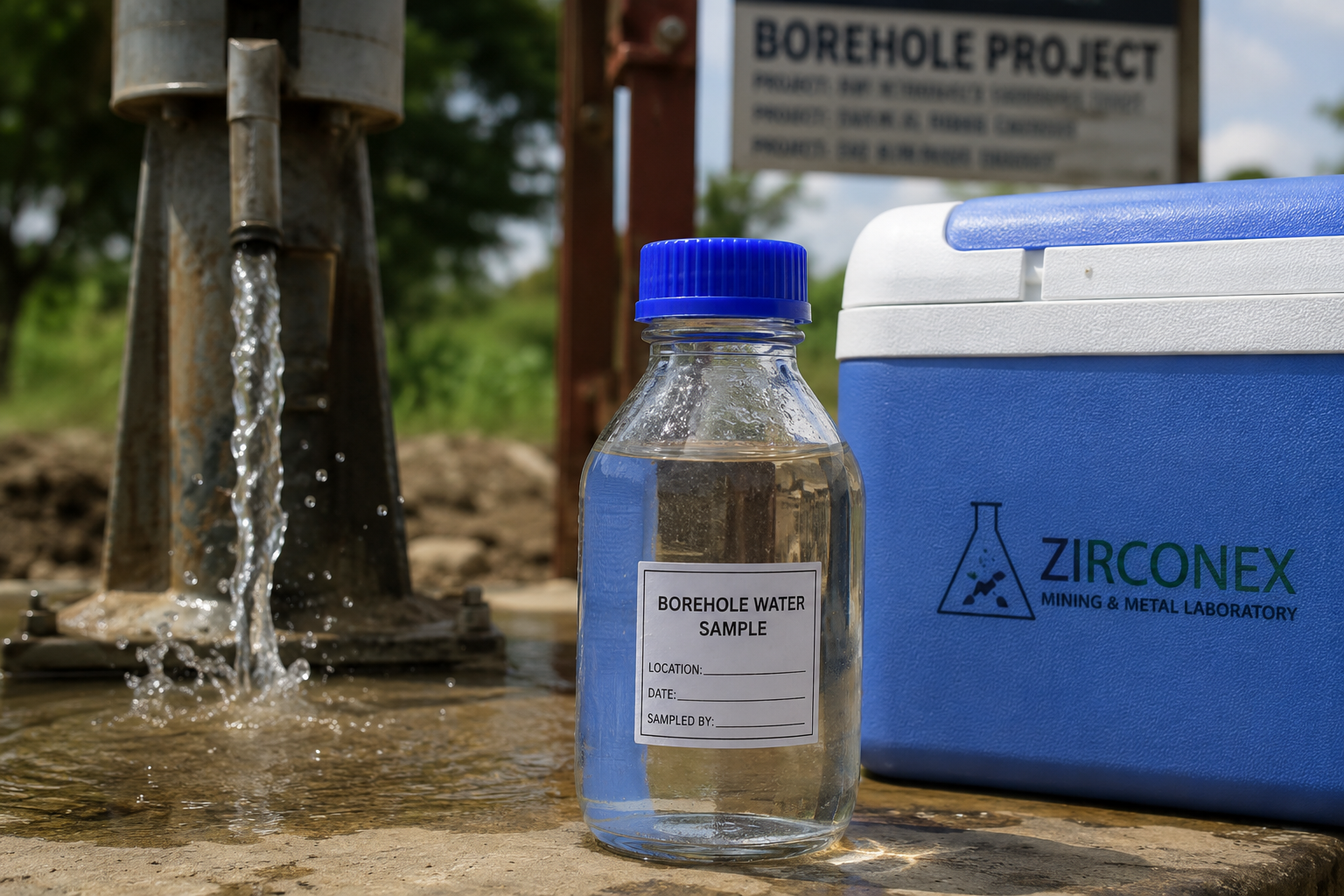
Borehole Water Testing: Why You Should Test Your Water After Drilling
Clear Water Does Not Always Mean Safe Water Drilling a borehole is an important investment for homes, businesses, industries, construction projects, and communities. However, one of the most important steps is often overlooked after drilling: water quality testing. Water that looks clean and clear may still contain contaminants that cannot be detected by sight, taste, or smell. Dissolved salts, excessive hardness, nitrates, heavy metals, microorganisms, and other substances may be present even when water appears perfectly safe. That is why borehole water testing should be carried out before newly drilled water is used for drinking, domestic activities, industrial processes, or other applications. At Zirconex Mining & Metal Laboratory, we provide comprehensive physicochemical and microbiological water analysis to help individuals, businesses, industries, and organisations understand the quality and suitability of their water. Why Should You Test Borehole Water? The quality of groundwater varies depending on the geology, soil composition, depth of the borehole, surrounding activities, and other environmental factors. A newly drilled borehole may produce water that is visually clear but contains elevated levels of certain chemical or biological parameters. Water quality testing can help you: What Does Borehole Water Testing Cover? At Zirconex Mining & Metal Laboratory, our water analysis services cover a broad range of physicochemical and microbiological parameters, depending on the intended use of the water and the client’s testing requirements. Our testing can include: Physicochemical Water Analysis Parameters may include: Microbiological Water Analysis Microbiological testing can help determine whether water contains microorganisms that may make it unsuitable for its intended application. This is particularly important for borehole water intended for drinking and domestic use, as microbial contamination may not produce any obvious change in the appearance of the water. Water Testing for Different Applications Borehole and water-quality testing is not limited to newly drilled wells. Different industries and applications require reliable water-quality information. Zirconex provides water analysis services for: Newly Drilled Boreholes: Establish the quality of groundwater before putting a newly drilled borehole into use. Domestic and Commercial Water Supplies: Assess water quality for homes, offices, hotels, schools, estates, and commercial facilities. Industrial Projects: Evaluate water used in industrial processes and support water-quality monitoring programmes. Construction Projects: Test water used for construction-related activities where water quality may affect processes or materials. Bottled and Packaged Water: Support quality assessment and monitoring of water intended for packaging and commercial distribution. Environmental Monitoring: Generate reliable analytical data for environmental assessments, monitoring programmes, and regulatory requirements. Don’t Judge Water Quality by Appearance Alone One of the biggest misconceptions about groundwater is that clear water must be safe water. In reality, many water-quality problems are invisible. Water can appear clean while containing dissolved substances, elevated mineral concentrations, heavy metals, nutrients, or microorganisms. Laboratory analysis provides scientific data that helps you move beyond assumptions and understand what is actually present in your water. Proper Sampling Is Part of Accurate Water Testing Reliable laboratory results begin with proper sample collection. Water samples should be collected using appropriate sampling containers and procedures to minimise contamination or changes in sample composition before analysis. For certain tests, sample handling, preservation, storage, and transportation can also affect the reliability of results. If you are unsure how to collect your water sample, contact Zirconex Mining & Metal Laboratory for guidance before sampling. Make Water Quality Testing Part of Your Borehole Project A borehole project should not end when drilling is completed. Water quality testing is an essential step in determining whether the water is suitable for its intended purpose. Whether you have just drilled a borehole, operate a commercial facility, manage an industrial project, or require routine environmental monitoring, laboratory water analysis can provide the information you need to make informed decisions. At Zirconex Mining & Metal Laboratory, our analytical services are designed to provide reliable water-quality data for a wide range of applications. Drill It. Sample It Correctly. Test It. Use It Confidently. Don’t assume your borehole water is safe simply because it looks clean. Contact Zirconex Mining & Metal Laboratory to arrange comprehensive physicochemical and microbiological water analysis for your borehole or water supply. Frequently Asked Questions About Borehole Water Testing Is borehole water safe to drink without testing? Not necessarily. Groundwater can contain chemical or microbiological contaminants that cannot be detected by appearance, taste, or smell. Laboratory testing is recommended before using newly drilled borehole water for drinking. How often should borehole water be tested? Testing frequency depends on the intended use of the water, the surrounding environment, regulatory requirements, and changes in water quality. Initial testing is particularly important after drilling, with periodic monitoring recommended where appropriate. What parameters should be tested in borehole water? The appropriate parameters depend on the intended use of the water. Common tests include pH, conductivity, TDS, salinity, turbidity, hardness, alkalinity, major ions, nutrients, metals, and microbiological parameters. Can clear borehole water still be contaminated? Yes. Some contaminants are dissolved or microscopic and therefore cannot be identified by simply looking at the water. Where can I test my borehole water? Zirconex Mining & Metal Laboratory provides comprehensive physicochemical and microbiological water analysis services for boreholes, domestic and commercial water supplies, industrial projects, bottled and packaged water, and environmental monitoring. Contact us today
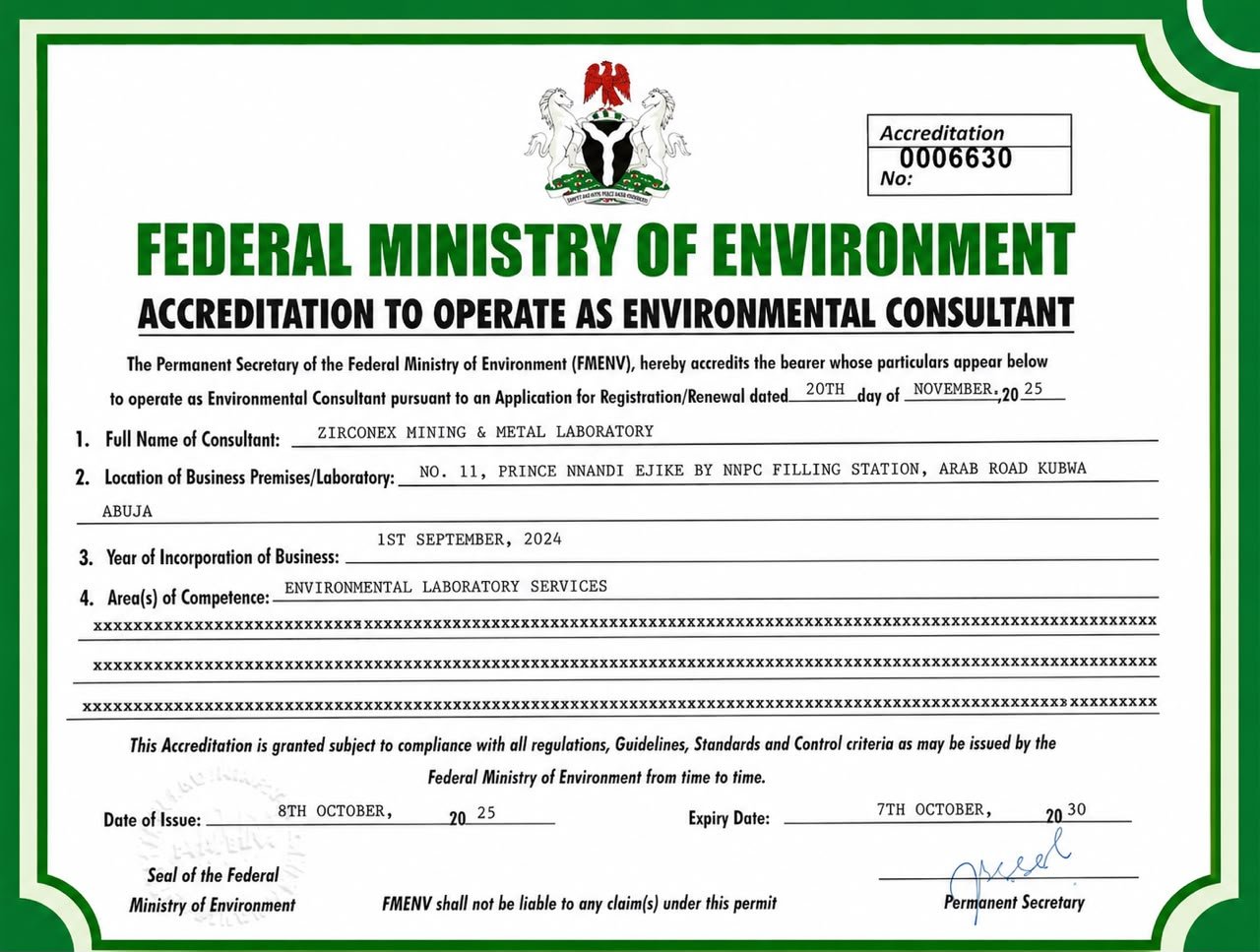
Zirconex Mining & Metal Laboratory Achieves FMEnv Accreditation as an Environmental Consultant
At Zirconex Mining & Metal Laboratory, we are proud to announce a significant milestone in our journey toward delivering world-class laboratory and environmental services. We have been officially accredited by the Federal Ministry of Environment (FMEnv), Nigeria, to operate as an Environmental Consultant with recognized competence in Environmental Laboratory Services. This prestigious accreditation reinforces our commitment to providing reliable, scientifically accurate, and regulatory-compliant environmental testing and consulting solutions that support sustainable development across Nigeria and beyond. A Commitment to Environmental Excellence Environmental management has become an essential part of responsible industrial and mining operations. Organizations today require accurate environmental data to comply with regulations, protect natural resources, and make informed operational decisions. Our FMEnv accreditation demonstrates that Zirconex possesses the technical expertise, qualified personnel, and laboratory capabilities necessary to deliver dependable environmental services that meet national regulatory requirements and internationally recognized standards. Our Environmental Laboratory Services As an accredited environmental laboratory and consulting firm, Zirconex offers a comprehensive range of environmental testing and analytical services, including: Our laboratory combines modern analytical techniques with strict quality assurance procedures to produce accurate, reliable, and defensible results for every project. Supporting Sustainable Development Across Industries Our accredited environmental services are designed to support organizations operating in: By providing precise laboratory data and technical expertise, we help our clients meet environmental compliance requirements, manage environmental risks, and promote sustainable resource development. Delivering Reliable Data for Better Decisions Reliable environmental data forms the foundation of effective environmental management. Whether evaluating water quality, monitoring air emissions, assessing contaminated soils, or supporting environmental impact studies, our laboratory provides scientifically defensible analytical results that clients can trust. At Zirconex, our commitment extends beyond laboratory testing. We partner with our clients to deliver actionable insights that support responsible environmental stewardship, regulatory compliance, and long-term operational success. Thank You to Our Clients and Partners This achievement would not have been possible without the confidence and support of our valued clients, trusted partners, and dedicated team of professionals. Their continued trust inspires us to raise the standard of environmental laboratory services in Nigeria. As we celebrate this important milestone, we remain committed to innovation, technical excellence, and continuous improvement in every service we provide. Partner with Zirconex If your organization requires accredited environmental laboratory testing, environmental monitoring, regulatory compliance support, or environmental consulting services, Zirconex Mining & Metal Laboratory is ready to help. Our team is committed to delivering accurate laboratory data, timely reporting, and expert technical support to help you make informed environmental decisions with confidence. At Zirconex, we don’t just generate laboratory results—we provide trusted data that supports responsible resource development and environmental stewardship. Contact us today to discuss your environmental laboratory and consulting requirements.

Platinum Crucibles in Analytical Chemistry
In analytical chemistry, accurate results do not begin with the analytical instrument. They begin much earlier—with proper sample preparation. For geological, mining, and metallurgical samples, sample preparation can be one of the most critical stages of the entire analytical process. Even the most sophisticated analytical equipment cannot produce reliable results if the sample has not been completely and appropriately prepared. At ZIRCONEX Mining & Metal Laboratory, we understand this principle. That is why we invest not only in advanced analytical instruments but also in specialized sample-preparation equipment, including platinum crucibles (Pt). What Is a Platinum Crucible? A platinum crucible is a laboratory vessel manufactured from platinum and designed to withstand extremely high temperatures and demanding chemical conditions. Because platinum is highly resistant to corrosion and oxidation, platinum crucibles are widely used in analytical chemistry, particularly for high-temperature fusion digestion of geological and mineral samples that are difficult to decompose using conventional acid digestion. For laboratories involved in mineral analysis, geological testing, metallurgical analysis, and geochemical characterization, this capability can make a significant difference in analytical accuracy. Why Is Platinum Crucible Important in Mineral Analysis? Many minerals are naturally resistant to chemical attack. Minerals such as zircon, chromite, cassiterite, rutile, refractory oxides, and certain silicate minerals may not be completely decomposed through conventional acid digestion alone. When a sample is not completely digested, some of the elements contained within the mineral structure can remain locked in the undissolved material. This creates a potential analytical problem. If the target elements are not fully released into solution, the laboratory may obtain results that underestimate their actual concentrations. In mining and metallurgical applications, such inaccuracies can affect decisions involving mineral characterization, resource evaluation, ore processing, quality control, and exploration. This is why appropriate sample preparation is essential. How Fusion Digestion Works For samples that are resistant to conventional acid digestion, fusion digestion provides an effective alternative. The process generally involves finely pulverizing the sample and mixing it with an appropriate flux. Depending on the analytical method and sample characteristics, fluxes such as lithium borate or sodium peroxide may be used. The mixture is then heated in a suitable crucible, such as a platinum crucible, at very high temperatures—often exceeding 1,000°C. During the fusion process, the original mineral structure is broken down and converted into a homogeneous melt. The resulting material can subsequently be dissolved into solution and prepared for instrumental analysis. The objective is simple: to ensure that the elements of interest are released from the mineral matrix as completely as possible before measurement. From Sample Preparation to Reliable Results It is easy to focus on sophisticated analytical instruments when discussing laboratory testing. However, analytical accuracy depends on the entire workflow—not just the instrument. The process can be viewed as a chain: Sample collection → Sample preparation → Digestion/Fusion → Instrumental analysis → Data interpretation → Final reporting A weakness at any stage can compromise the reliability of the final result. This is particularly important in mineral and metallurgical testing, where complex sample matrices can present significant analytical challenges. At ZIRCONEX Mining & Metal Laboratory, our approach is therefore comprehensive. We invest in the different stages of the analytical process, from sample preparation and digestion to instrumental analysis and reporting, because reliable laboratory results require quality control throughout the entire workflow. The Role of Proper Sample Preparation in Mining and Geochemistry Reliable mineral analysis can support a wide range of technical and commercial decisions. Accurate sample preparation and digestion can help laboratories: For complex geological samples, the choice of digestion method is particularly important. Not every sample responds equally to the same preparation technique, which is why experienced laboratory professionals must select methods appropriate to the material being analyzed and the analytical objectives. Precision Starts with Preparation At ZIRCONEX Mining & Metal Laboratory, we believe that laboratory quality is built long before a sample reaches the analytical instrument. Investing in specialized equipment such as platinum crucibles demonstrates an important principle of analytical science: reliable results depend on reliable preparation. Sometimes, the smallest piece of laboratory equipment carries one of the biggest responsibilities. Precision starts with preparation. Need Reliable Mineral and Metallurgical Analysis? ZIRCONEX Mining & Metal Laboratory provides laboratory testing and analytical services designed to support the mining, geological, environmental, and metallurgical sectors. For professional laboratory analysis and reliable analytical data, contact ZIRCONEX Mining & Metal Laboratory to discuss your sample testing requirements.

Environmental Laboratory Testing: Building a Safer and More Sustainable Future
Environmental quality is no longer just a regulatory requirement—it is a critical component of sustainable development, responsible industrial operations, and public health. Whether it’s monitoring water quality, assessing soil contamination, evaluating air emissions, or ensuring compliance with environmental regulations, accurate laboratory analysis provides the scientific foundation for informed decision-making. At Zirconex Mining & Metal Laboratory, we are committed to delivering dependable environmental testing services that help organizations understand environmental conditions, minimize risks, and meet regulatory requirements with confidence. Why Environmental Laboratory Testing Matters Every industrial, mining, construction, agricultural, or infrastructure project has the potential to impact the environment. Without accurate scientific analysis, it becomes difficult to identify contamination, evaluate environmental risks, or implement effective mitigation measures. Professional environmental laboratory testing enables organizations to: Reliable analytical data ensures that environmental decisions are based on facts rather than assumptions. Comprehensive Environmental Testing Services At Zirconex, our environmental laboratory is equipped to support a wide range of testing requirements across multiple industries. Our services include: Water Quality Analysis Water testing helps determine whether groundwater, surface water, wastewater, or drinking water meets applicable quality standards. Parameters commonly analyzed include: These analyses support industries, environmental consultants, government agencies, and communities in maintaining safe water resources. Soil Testing Soil analysis provides valuable information about contamination levels, chemical composition, and overall environmental condition. Testing may include: These results are essential for environmental investigations, site assessments, agriculture, mining, and land development projects. Environmental Monitoring Routine environmental monitoring enables organizations to evaluate environmental performance throughout the lifecycle of a project. Regular monitoring supports: Continuous monitoring helps identify changes early and supports proactive environmental management. Supporting Regulatory Compliance Environmental regulations continue to evolve as governments place greater emphasis on sustainable development and environmental protection. Accurate laboratory data allows organizations to: Reliable laboratory results reduce uncertainty and provide evidence-based documentation for stakeholders and regulators. Quality You Can Trust Environmental testing is only as reliable as the laboratory performing the analysis. At Zirconex, quality is embedded throughout every stage of the analytical process—from sample reception and preparation to testing, quality assurance, and final reporting. Our laboratory follows standardized procedures designed to ensure accuracy, consistency, and data integrity, supporting our ongoing commitment to international best practices. This commitment is reinforced by our ISO 9001:2015 Quality Management System certification and our continued progress toward ISO/IEC 17025 accreditation. Industries We Serve Our environmental laboratory services support clients across numerous sectors, including: Regardless of project size, our objective remains the same: providing dependable analytical results that support informed decision-making. Why Choose Zirconex? Clients choose Zirconex because we combine technical expertise with a commitment to quality and customer service. Our strengths include: We understand that every analytical result has real-world implications, which is why precision, consistency, and integrity remain at the core of everything we do. Partner with Zirconex for Reliable Environmental Testing Environmental decisions should always be supported by accurate scientific data. Whether you require routine environmental monitoring, regulatory compliance testing, baseline studies, or specialized environmental analyses, Zirconex Mining & Metal Laboratory is ready to support your project with dependable laboratory solutions. Our mission is to provide accurate, timely, and reliable environmental testing services that help organizations protect the environment, meet compliance requirements, and make confident decisions backed by science. Contact Zirconex today to learn more about our environmental laboratory services and discover how our team can support your next environmental project.