


Mineral composition testing is one of the most important steps in the mining and mineral trading industry. Whether you are a small-scale miner, an exploration company, a mineral exporter, or an investor, understanding the true composition of your mineral sample helps you make better business decisions, avoid losses, and increase profitability.
In Nigeria’s growing mining sector, mineral laboratory testing has become essential for verifying mineral quality, determining commercial value, meeting export requirements, and building trust with buyers.
This guide explains how mineral composition testing works in Nigeria, why it matters, the common testing methods used, and what miners should expect during the process.
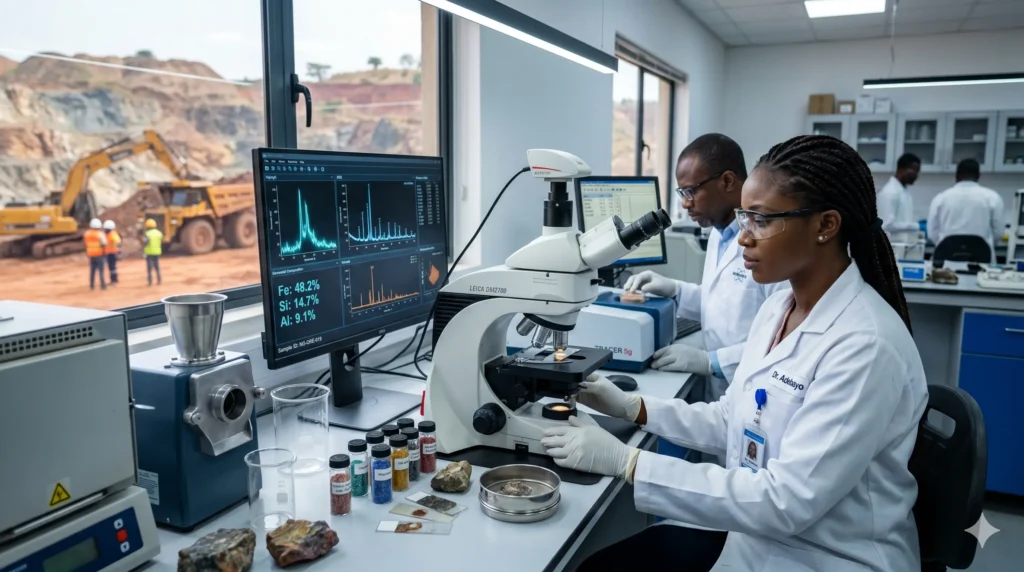
What Is Mineral Composition Testing?
Mineral composition testing is the scientific analysis of a mineral sample to determine:
- The types of minerals present
- The percentage of each element or compound
- The purity level
- The presence of valuable metals
- Impurities or contaminants
For example, a lithium ore sample may contain:
- Lithium oxide (Li₂O)
- Iron
- Silica
- Aluminum
- Other trace elements
Testing helps determine whether the mineral deposit is commercially valuable and suitable for processing, refining, or export.
Why Mineral Testing Is Important
1. Determines the Value of Your Minerals
The market value of minerals depends heavily on their composition and purity. Two samples may look similar physically but have completely different economic value after laboratory analysis.
Without proper testing, miners risk:
- Undervaluing their minerals
- Selling to buyers at unfair prices
- Investing in low-grade deposits
2. Helps Buyers Trust Your Product
Most serious mineral buyers request laboratory reports before making payment or entering long-term supply agreements.
A professional laboratory report gives buyers confidence in:
- Mineral quality
- Consistency
- Purity levels
- Export suitability
3. Supports Export and Regulatory Compliance
Mineral exports often require testing documentation and certificates that verify the contents of the shipment.
Laboratory analysis can help support:
- Export documentation
- Quality verification
- Regulatory approvals
- International trade requirements
4. Reduces Financial Risk
Mining operations can be expensive. Before investing heavily in excavation, equipment, or processing, testing helps confirm whether a deposit is economically viable.
Common Minerals Tested in Nigeria
Mining laboratories in Nigeria commonly analyze:
- Gold ore
- Lithium ore
- Lead-zinc
- Tin ore
- Columbite
- Tantalite
- Copper ore
- Iron ore
- Manganese
- Bauxite
- Limestone
- Kaolin
As global demand for critical minerals increases, accurate testing has become more important than ever.
Step-by-Step Process of Mineral Composition Testing
Step 1: Sample Collection
The first stage is collecting representative mineral samples from the mining site.
Proper sampling is critical because inaccurate samples can produce misleading laboratory results.
Samples may be collected from:
- Surface deposits
- Drilling operations
- Excavation pits
- Processing plants
- Stockpiles
A good sample should represent the actual mineral deposit as accurately as possible.
Step 2: Sample Preparation
Before testing begins, the laboratory prepares the sample by:
- Drying
- Crushing
- Grinding
- Sieving
- Homogenizing
This ensures consistency and improves testing accuracy.
Sample contamination during preparation must be avoided to maintain reliable results.
Step 3: Laboratory Analysis
The prepared sample is then analyzed using specialized laboratory equipment and scientific methods.
Common mineral testing methods include:
X-Ray Diffraction (XRD)
X-Ray Diffraction (XRD) is a laboratory technique used to identify the crystalline structure and mineral composition of a sample.
It is commonly used in mining and geological analysis to determine:
- The mineral phases present in an ore sample
- Crystal structures of minerals
- Material purity
- Identification of unknown minerals
- Quantitative mineral analysis
XRD is especially valuable in:
- Lithium exploration
- Geological research
- Mineral characterization
- Ore identification
- Industrial mineral analysis
Benefits of XRD include:
- Accurate mineral identification
- Non-destructive analysis
- High precision results
- Reliable characterization of complex mineral samples
For mining companies and mineral investors, XRD testing helps provide critical information about the composition and commercial potential of mineral deposits. Learn more about our X-Ray Diffraction facility from this recent post on our blog. If you are looking for where to run XRD in Nigeria, contact Zirconex Mining and Metal Laboratory today.
Fire Assay
Fire assay is widely used for precious metals such as:
- Gold
- Silver
- Platinum
It is considered one of the most accurate methods for precious metal analysis.
Atomic Absorption Spectroscopy (AAS)
AAS measures the concentration of specific metals within a sample.
It is commonly used for:
- Trace metal analysis
- Environmental testing
- Quality verification
Inductively Coupled Plasma (ICP) Analysis
ICP testing provides highly detailed multi-element analysis.
It is useful for:
- Advanced mineral exploration
- High-precision testing
- Research and industrial applications
Understanding Your Laboratory Report
After testing is completed, the laboratory issues a report containing:
- Sample identification
- Testing methods used
- Elemental composition
- Percentage concentrations
- Observations and remarks
For example, a lithium report may show:
- Li₂O percentage
- Iron content
- Silica concentration
- Moisture levels
Understanding these values helps determine:
- Commercial viability
- Processing requirements
- Market value
- Export readiness
Common Problems That Affect Mineral Test Results
Poor Sampling
Bad sampling techniques can produce inaccurate results that do not represent the actual deposit.
Sample Contamination
Contamination can occur during:
- Collection
- Packaging
- Transportation
- Laboratory preparation
Using Unqualified Laboratories
Inexperienced laboratories may produce inconsistent or unreliable reports.
Choosing a professional mineral laboratory is essential for accurate testing and credibility.
How to Choose a Reliable Mineral Laboratory in Nigeria
When selecting a mineral testing laboratory, consider:
- Experience in mining and mineral analysis
- Available testing equipment
- Accuracy and consistency
- Turnaround time
- Professional reputation
- Quality assurance processes
A reliable laboratory should provide clear, transparent, and scientifically accurate reports.
The Future of Mineral Testing in Nigeria
Nigeria’s mining industry continues to grow rapidly, especially in critical minerals such as lithium and other battery materials.
As international buyers demand higher quality standards, professional mineral testing will become even more important for:
- Exporters
- Investors
- Exploration companies
- Small-scale miners
- Government projects
Mining businesses that prioritize proper laboratory testing are more likely to attract serious buyers and long-term opportunities.
Conclusion
Mineral composition testing plays a major role in modern mining operations. Accurate laboratory analysis helps miners determine mineral value, improve decision-making, reduce risk, and meet market standards.
Whether you are exploring a new mining site, preparing minerals for export, or negotiating with buyers, professional laboratory testing provides the data needed to move forward with confidence.
For mining companies operating in Nigeria, working with an experienced laboratory like Zirconex Mining and Metal Laboratory can help ensure accurate results, professional reporting, and better business outcomes in the competitive mineral industry.